Signed Books, Do They Matter?


I collect a lot of Stephen King books.  I do not collect his signature.  I have  one book signed by Stephen King (Under The Dome) and that is really enough to satisfy me.  Because. . . I don't get it.  How does his marking the page increase or change the books value?  I'm serious.  Couldn't he just check mark each book, acknowledging that for 1 second he was in contact with that copy of that book?

I do seem to have a lot of signed books!  Most of them were given to me.  Sometimes I've bought books, only to discover later that they are signed. yes, it does make me happy -- no, I don't know why.  I'm waiting for someone in the psychology department to tell me why.

One reason  I may hesitate to buy signed items is that I personally have no way of verifying a signature. When it comes to King, I would have trusted  Betts Bookstore -- and now the Overlook Connection and Very Fine Books.  But ebay. . . no thank you!

Some people collect much more than King's signature on books.  When anything the guy signs is instantly of value, I start  to wonder what's really up.  So people put credit card receipts up for sale because. . . SK signed it.

image credit: /www.ashvegas.com
I  find the above quite strange.  Is Stephen King cool because he writes great books and we want to treasure  those  books, or is he cool because he's part of the Hollywood culture of media idols?  We  should have no interest in being like 13 year olds in need of a teen idol -- where anything he touches is of strange significance to the fan.  True fans of Stephen King call themselves, "Constant Readers."  A term King coined -- but I like it.  The name suggests that the Constant Reader's primary interest is in reading the books, not chasing the man.

I read that the value of a signature is greater when it is "flat signed" instead of inscribed with a note  to the person it is intended  for.  Once again,  I think that's nuts!  I'd rather have a book that had meaning when it was signed than one that is "FLAT" signed!

For instance, here is a copy of Carrie that has a pretty cool note (espeically if you're Larry!)

www.icollector.com
Here are some signed books I own.
1. Under The Dome, Stephen King
2. The Dark Tower 7 (signed by Michael Whelan.)
3. The Wind Through The Keyole (signed by Jae Lee)
4. The Talisman (signed by Peter Straud and illustrator Rick Berry.  #2849)
5. Stephen King's Richard Bachman, Michael Collins
6. Bone  Soup, T.M. Wright
7. BAAL, Robert McCammon
8. Forrest Gump, Winston Groom  (inscribed to my wife: "To Rebecca, all best.")
9. The Case for Antioch, Jeff Iorg
10. Money, Possessions and Eternity, Randy Alcorn
11. The Law Of Rewards, Randy Alcorn
12. You The Warrior Leader,  Bobby Welch.  (Inscribed, "To David!  A great warrior leader for  our Savior and Souls!  Bless you!!  Bobby.")
13. The Glory of God, Chris Morgan.  (Inscribed: "David, many thanks for investing yourself  in teaching our CBU students."
14. The Gift of Valor a war story, Michael M. Phillips (Inscribed: "June 7, 2005.  For Pastor David Squyres.  Thanks for the support and prayers you offer for  the Marines.  Michael Phillips.")

I had a book about Alchatraz that I got signed by the author on my visit to the Rock, but I don't know where it is now.   It was about his life of crime, hard time on the Rock, and his coming to faith in Christ.

The Largest Collection Of Signed Books
Who has the largest collection of signed books?  You'll never guess!  According to Guinness World Records, that distinction belongs to Pastor Rick Warren, author of the Purpose Driven Life.

The website states:
Richard Warren of Lake Forest, California, USA, has collected 2,381 books, all signed by their original authors. 
Pastor Rick Warren began building his personal library in 1970 at the age of 16. Over the years as he travelled and spoke around the world, he began asking authors to autograph their books for him. Also many other authors began to send him their books autographed. The collection was verified by the bookseller Ed Postal who specialises in rare books and is a member of ABAA (Antiquarian Booksellers’ Association of America). Of 2,422 books, the total number of books accepted was 2,381.
I wish I had room for that many books!  I wonder if Rick Warren has any signed books by Stephen King.  Or. . . if Stephen King has any signed books by Warren.

I once got a personal letter from Rick Warren, responding to a letter I'd written him in which I thanked him for some insights on preaching.  Imagine, some people would have kept  that letter just for the signature.

The Sneaky Signature:

This 2007 story is one of my favorites --
A bookstore manager was stunned when she saw someone enter her bookstore and begin writing in the books. The person quickly left, causing the employees think they were the victims of vandalism. 
Ms. Ellis said, "So we immediately ran to the books and lo-and-behold here was the signature in several books. We sort of spun around on our heels, [saying] 'where did he go, where did he go. . . So I went over and introduced myself ... He was lovely, very nice, charming." 
King signed a total of six books. I don't know, I just find something fun about that story! Imagine going to the bookstore, not a specialty store or something like that, just a regular store, and choosing to buy a Stephen King book -- and it turns out to be signed! Cool.
www.abc.net
Here is King signing books on The Simpsons:


I wonder if book signings are one of those things that authors hate.  I would!  It takes away from time that could be spent writing!  And, it forces the writer to have to be nice to all those annoying fans  who want to talk about why Carrie's father died before she was born, but managed  to save her  mother from killing her when Carrie was a baby.  And you can't say to these fans, "Because it's just a book.  I'm making this stuff up!"  No -- they actually think there's an answer!

Tell me what signed books you have.

The Stand Journal 4: Writing


As I read the Stand Complete and Unabridged, I am noticing some things King does in writing that I thought were no-no's.  No one ever said they couldn't or shouldn't be done -- I just assumed that logically you couldn't do that.  Most  of this has to  do with point of view.

It is interesting to me that when disucssing the Trashcanman, King starts out with a tight narration of what is taking place in his head.  Then he moves  to the crazy man's memories.  But then, he discusses things form the point of view of Transcanman's step father --who is long dead.  This gives the reader information to Trashies background that even Trashcanman himself doesn't have.

Note this narration from chapter 34:
It wasn’t right, his mother marrying that Sheriff Greeley. The year he was in the fourth grade he had started lighting fires in mailboxes, that was the year he burned up old Mrs. Semple’s pension check, and he got caught again. Sally Elbert Greeley went into hysterics the one time her new husband mentioned sending the boy to that place down in Terre Haute (You think he’s crazy! How can a ten-year-old boy be crazy? I think you just want to get rid of him! You got rid of his father and now you want to get rid of him!). The only other thing Greeley could do was to bring the boy up on charges and you can’t send a kid of ten to reform school, not unless you want him to come out with a size eleven a-hole, not unless you wanted your new wife to divorce you." p.279
So the narration went like this:
1. Trashcanman's memories and feelings about his mother  marrying Sheriff Greeley.
2. Trashcan lighting fires.
3. SHIFT: Trashcanman's mother goes into "hysterics" when Greeley mentioned sending Trash out.
4. The narrator drops us into a conversation from the past between Trash's parents.
5. The last sentense is from Greeley's point of view.

Is there a way to chart that?  First of all, I really like that kind of writing!  That was great!  But I didn't know it was allowed.  I thought when telling the story from Trashcanman's point of view, the narrator would have to stay close to his memories and understanding.  But King feels free to give us information that Trashcan himself was not privy to.

The Stand Journal 3: War Of The Worlds


Chapter 26 of The Stand has a great section made up completely of transcripts.  It reminds me of the radio version of War of the Worlds.  When the martians start attacking, everything is described by the news broadcaster for an audience who can't see the events.  King does a similar thing with an attack by the army on college students -- not describing the event himself  as narrator, but by giving transcripts of police radios.

By the way, both scenes have a character named Philips.  (That means nothing -- but is interesting.)

So compare these scenes, noting how the dialogue is used to describe the action.  

THE STAND:
“Base to unit 13! What’s going on out there? What’s happening?” 
“This is Chumm, Dick. I’ll tell you what’s happening out here. It’s a slaughter. I wish I was blind. Oh, the . . . ! They ... ah, they’re mowing those kids down. With machine-guns, it looks like. As far as I can tell, there wasn’t even any warning. The kids that are still on their feet ... ah, they are breaking up ... running to all points of the compass. . . . I just saw a girl cut in half by gunfire! Blood ... there must be seventy, eighty kids lying out there on the grass. They—” 
“Chumm! Come in! Come in, unit 12!” 
“Base, this is unit 17. Do you copy? Over.”
War of the Worlds:
PHILLIPS: Ladies and gentlemen (Am I on?). Ladies and gentlemen, here I am, back of a stone wall that adjoins Mr. Wilmuth's garden. From here I get a sweep of the whole scene. I'll give you every detail as long as I can talk. As long as I can see. More state police have arrived They're drawing up a cordon in front of the pit, about thirty of them. No need to push the crowd back now. They're willing to keep their distance. The captain is conferring with someone. We can't quite see who. Oh yes, I believe it's Professor Pierson. Yes, it is. Now they've parted. The Professor moves around one side, studying the object, while the captain and two policemen advance with something in their hands. I can see it now. It's a white handkerchief tied to a pole . . . a flag of truce. If those creatures know what that means . . . what anything means!. . . Wait! Something's happening! 
(HISSING SOUND FOLLOWED BY A HUMMING THAT INCREASES IN INTENSITY) 
PHILLIPS: A humped shape is rising out of the pit. I can make out a small beam of light against a mirror. What's that? There's a jet of flame springing from the mirror, and it leaps right at the advancing men. It strikes them head on! Good Lord, they're turning into flame! 
(SCREAMS AND UNEARTHLY SHRIEKS) 
PHILLIPS: Now the whole field's caught fire. (EXPLOSION) The woods . . . the barns . . . the gas tanks of automobiles . . . it's spreading everywhere. It's coming this way. About twenty yards to my right . . . 
(CRASH OF MICROPHONE ... THEN DEAD SILENCE) 
ANNOUNCER: Ladies and gentlemen, due to circumstances beyond our control, we are unable to continue the broadcast from Grovers Mill. Evidently there's some difficulty with our field transmission. However, we will return to that point at the earliest opportunity. In the meantime, we have a late bulletin from San Diego, California. Professor Indellkoffer, speaking at a dinner of the California Astronomical Society, expressed the opinion that the explosions on Mars are undoubtedly nothing more than severe volcanic disturbances on the surface of the planet. We now continue with our piano interlude. 
The wasted landscape in The Stand is also reminiscent of Orson Well's version of War of the Worlds.  When the cities begin to burn  and people start traveling across a broken America, it reminds me of the America presented in The War Of The Worlds.  (The radio version -- the book took place in England.) The original movie version did not capture the bigness of the events.  The later version, with Tom Cruise, was just. . .

Of course, germs play an important role in both stories.  In War of the World's, germs clears the landscape of Martians.  In The Stand germs clear the landscape of people.

Discussing the President's planned address to the nation, a newspaper notes:
Advance copies of the President’s speech indicate that he will “spank” the American people for overreacting, and compare the current panic to that which followed Orson Welles’s “War of the Worlds” radio broadcast in the early 30s
Finally, as Trashcanman sets fire to the landscape,
The entire eastern arc of the horizon danced with fire. It reminded him of a Classic funnybook he had owned as a child, an adaptation of H. G. Wells’s The War of the Worlds. Now, years later, the boy who had owned that funnybook was gone, but the Trashcan Man was here, and Trash owned the wonderful, terrible secret of the Martians’ deathray. (The Stand, p.590-591.)

Cemetery Dance Covers For DOCTOR SLEEP


Here are the covers Cemetery Dance released for Doctor Sleep.  I think they look great!

You can order the book at www.cemeterydance.com

Gift Edition:
Gift Edition
Gift Edition


Limited Edition:
Limited Edition
Limited Edition


Lettered Edition:
Lettered Edition
Lettered Edition

Salem's Lot Cover Designer Dies

This was interesting because cover  designers  don't get mentioned often.

From www.publishersweekly.com
James Plumeri, cover art director for two decades (1985-2005) with Bantam Dell, and before that for 15 years with New American Library, died February 2. He was 79. Plumeri produced some 6,500 book jackets and covers for Bantam Dell alone, and at NAL designed the mass market covers for Stephen King’s Salem's Lot and The Shining.

Cemetery Dance Announces Special Edition Of DOCTOR SLEEP


Cemetery Dance has given word that they will be producing a special edition of Doctor Sleep.

Deluxe Slipcased Gift Editiion, $95.  Deluxe SIGNED & Traycased Limited Edition, $450.

From the Cemetery Dance website:
The exclusive Cemetery Dance Special Limited Edition of Doctor Sleep by Stephen King will be published in three states, all of them printed in two colors and bound in fine materials. 
Special Features Exclusive to this Collector's Edition:• deluxe oversized design (7 inches X 10 inches) featuring two-color interior printing
• full color cover artwork by Vincent Chong
• six color paintings by Vincent Chong printed on a high-quality glossy stock and tipped into the book
• twenty black & white full page illustrations and six black & white spot illustrations by Erin S. Wells
• high-quality embossed endpapers and fine bindings for all three editions
• full-color signature sheets in the signed editions
• extremely collectible print run that is a tiny fraction of the print run of the trade hardcover edition from Scribner — and you will NOT find our edition in chain bookstores!
You can order the book at www.cemeterydance.com

Good Sequels


In an interview with EW, Stephen King said one of his hesitations about doing a sequel to the Shining is that "most sequels really suck."  He gives only two exceptions: Huckleberry Finn  and the Godfather II.

Do you agree?  I'm not sure I do.  I think sometimes a story is better as it continues because the writer is in familiar territory and is working to their strengths.

Here are a few sequels that did not suck:
1. The Drawing of the Three, Stephen King
2. Odyssey, Holmer (The Illiad)
3. World Without End, Ken Follett (Pillars of the Earth)
4. The Empire Strikes Back, Glut/Lucas (Star Wars)
5. Piercing The Darkness, Frank Peretti (This Present Darkness)
6. Return of Sherlock Holmes, Conan Doyle (Sherlock Holmes)
7. Catching Fire, Suzanne Collins (Hunger Games)
8. Harry Potter And The Chamber Of Secrets, J.K. Rowling (Harry Potter)
9. Patriot Games, Tom Clancy (The Hunt For Red October)
10. Leaving Cold Sassy Tree, Olive Anne Burns (Cold Sassy Tree)
11. The Two Towers, Tolkien (The Fellowship Of The Ring)
(I have not read Talisman or Blackhouse)

Many famous writers have actually resisted the temptation to go back  and write sequels.  Charles Dickens and John Steinbeck to name two. I also notice that John Grisham also does not do a lot of  sequels.

I think King may feel some pain when it comes to sequels, since his own works have had to endure  the likes of Return to Salem's Lot, Firestarter II and all those dreadful Children of the Corn movies.

George Beahm once said that  Eyes of the Dragon deserved a sequel.

JOIN THE CONVERSATION:
1. What is your favorite sequel?
2. What Stephen King book would you like him to write a sequel  to?

Under The Dome Superbowl Ad


What's it like under the dome?  Right now the lights are out at the Superdome.  

Hey, does this NFL posting sound like it could be on the flap of a Stephen King book: 
"NEW ORLEANS -- Minutes into the third quarter of Super Bowl XLVII, the Mercedes-Benz Superdome slipped into darkness."

Of course, it's not like the  49ers really wanted to play football anyway.


Here is the video for the Under The Dome Superbowl ad:


King Talks DOCTOR SLEEP With EW


Anthony Breznican at EW has a great interview with Stephen King.  Breznican really presses King on the origins of Doctor Sleep and why King chose to return to the world of The Shining.  At first King just jokes that he used to think that Danny just married Charlie from Firestarter.  However, when he really started thinking about where Danny would be now, it seems the story began to carry itself.

King cites part of his inspiration for Doctor Sleep as coming from a morning news show about a cat who could sense when someone was going to die. 

He admits that he likes scaring people -- a lot.  King says, " I wanted to go back to that real creepy scary stuff."

When asked if he was intimidated to return to such a popular book, King admits that he was indeed hesitant, since most sequels "suck."  That's funny -- since it's exactly what many of you are afraid of with Doctor Sleep!

King also reveals a character named Abra -- a nod to the main female character in East of Eden by John Steinbeck.  I love it when King does stuff like that (gives nods in his work to other authors.)  He says it had been a while since he used a kid as a major character, and he was excited to do that.  Me too!  I really connect with King's characters that are children.

In the interview, King also tells us a little more about "The True Knot" and what inspired him to create these villains   

King says animatedly, 
"Doctor Sleep is a sequel to the novel. It’s not a sequel to the Kubrick film. At the end of the Kubrick film, the Overlook is still there. It just kind of freezes. But at the end of the book, it burns down."
King reveals that he hired Rocky Wood to read over the manuscript for consistency.   Actually, inconsistency doesn't bother me much -- I usually just go with the story where it's at.  I mean, novels are not history -- it's just a story.  When someone like King writes, and is digging into their own work, they have a mess on their hands because he's created such a vast universe of fiction.

I also really enjoyed the discussion of King's feelings about a prequel.  I've been reading "Before the Play" in TV Guide, and it's great.

Check out the full interview at shelf-life.ew.com

I think Doctor Sleep is going to work well because King has always been a writer of the time at hand.  He doesn't do a lot with the past, and certainly not much with the future -- he writes about the right now.    That means that a similar amount of time has passed in the world of the Shining as it has for us.  Or, put another way: Both books are set in the time they were written in.  

In the past King's characters with supernatural abilities have often been children or teens.  Carrie, Danny and Charlie all come to mind.  But in Doctor Sleep, King will take us into the adult world.  Danny used his powers as a child to get himself out of a jam -- and it worked quite well!  Now as an adult he can use those powers for a larger purpose to serve others.  (I'm totally guessing here.)

The Stand Journal 2


Since The Stand Unabridged was the first Stephen King book I read, it stands to reason that rereading it years later has resulted in discovering many things I missed the first time through.  I read the Stand a few years ago via book on tape, with Grover Gardner.  But that version was the abridgment and felt quite dated.

I am listening to the book, this time the unabridgement, but once again narrated by Grover Gardner.  I really enjoy his reading!  I was surprised when Gardner sang a few lines of the book (a radio commercial)

There are quite a few scenes that are quite noteworthy.  Fran’s confrontation with her mother and her fathers intervention was originally cut when King had to do surgery on the book.  It also did not make it in the movie.

Big Canvas:

The book has a “big” feel to it.  King often backs away from his characters to tell the larger story, allowing his characters to disappear into the crowd for a few moments.  The news footage of troops herding people about and the revelation that bodies are being dumped in the ocean all serve to pull back the curtain and show more of what’s happening on a national stage.

The stuff about the Government duping bodies in the ocean is interesting, and raises some questions.  If everyone is kicking the bucket so quickly, why bother to haul bodies out to sea?  The coverup is carried out by people who ought to be very sick and at home in bed or – dead.  It’s a lot of effort to round of bodies, even from hospitals, transport them to ships and then take them out to sea to be thrown into the ocean.

Another thing that opens the story up is that different regions of the country have unique names for the flu.  It’s Captain trips on the west coast, generally known as super-flu other places.  It is also called Choking Disease and Tube Neck in West Verginia.

King mentions the First Baptist Church of Atlanta.  This is a fairly famous church here Dr. Charles Stanley has been pastor. . . forever.
Graffito written on the front of the First Baptist Church of Atlanta in red spray paint: “Dear Jesus. I will see you soon. Your friend, America. PS. I hope you will still have some vacancies by the end of the week.”
What’s missing from Kings big picture is children.  He’s quite good at writing about children – and they are quite obviously absent from the landscape of the Stand.  Also, the lead characters are all quite unattached.  Fran, Stu, Nick and Larry (and Herold) are all single.  The married people all seem to die.  This leaves them pretty emotionally/relationally free.

Pacing:

King introduces each character who will survive the super-flu with a certain amount of care.  He isn’t in any hurry here.  He lingers over their situations, letting the reader meet each one.  I would think it would be tempting to focus on one or two people and then let them meet others as the story progresses.  But King prefers to introduce several key characters, all independent of one another, and allow the reader to anxiously await how King will pull all these strands together.

The early novel focuses on Fran, Stu and Larry.  Later we meet up with Nick, Lloyd and the Randall Flagg.  With most of these comes side characters, who are also well developed.  For instance, Fran and her father have some wonderful conversations.  Nick becomes good pals with the local law enforcement.  Lloyd’s lawyer is an interesting study.  He knows his client is guilty as sin, but has a plan to save him from the electric chair.  Larry’s mother is also a well developed character, showing disappointment and disapproval for her son – while still maintaining a deep love for him.  She is bothered that he just won’t grow up.  If only she could survive Captain Trips and see the man he will become!

Of course, even with all those characters brought onto stage, King still hasn’t introduced us to Tom, Mother Abigail, Rita, and even Herold has only gotten passing mention.  This is worth noting, since I’m over 200 pages into the book.  People are dropping dead everywhere, but King is in no rush to bring in more of the living.

Another scene I had forgotten, or maybe never read, involved Nick’s care of the Sheriff’s (John) wife.  Having dressed her in the gown she wanted to be burried in, Nick carries her two blocks to the funeral home.  “And when she was dressed as she had been on that day, he took her in his arms and carried her down to the funeral home in her lace, oh, in her lace: he carried her like a bridegroom crossing an endless threshold with his beloved in his arms.”  That’s beautiful.

Ray Flowers

I enjoyed the scenes with Ray Flowers, the radio personality.  I remembered her from the movie. Wasn’t I surprised to discover that in the book Ray Flowers is a man.  When soldiers are sent to kill Ray, two object and are shot on the spot.  The strength of government as the nation crumbles feels a little over the top.  When the world ends, soldiers aren’t likely to show up for work – thus  causing government to break down.  Instead, King has soldiers shooting people all over the place, shutting down news papers and cutting off TV stations.

Updates:

King did a little updating for the 90's – but some things remain stuck in the 70's.  Prices in particular need revision.  It would be interesting to have yet another update of The Stand, that would include the internet, youtube and terrorism.  In order to get news clips out, the novel has anchors showing stuff live on the air – only to result in the reporters being shot by the government.

Today that same information would be put on youtube.  Of course, the government might respond by cutting off the internet.  Raising a question. . . if everyone dies, would the internet keep chugging along?

What other changes would there be in an updated version of The Stand?

Mark Duplass Signs On To MERCY

deadline.com posted that Mark Duplass, who recently appeared in ZERO DARK THIRTY, has signed on for the film adaptation of Stephen King's short story, GRAMMA, renamed MERCY for the big screen.

Quigley talks GUNS

I enjoyed Kevin Quigley's review of GUNS at Fearnet.   Quigley is the administrator of charnelhousesk.

Quigley notes, "Guns” is a smart, important essay that works hard at using common sense as a tool for discussion. He doesn’t vilify gun owners – somewhat surprisingly, he is one – and he doesn’t believe in quick, token solutions."

If you like the review, hit "Like" on the FEARnet page!

Quigley's review is at www.fearnet.com

Blood Among The Stars: The Making Of Carrie


A new book by Ryan Clark and Lee Gambin are at work on a book that will detail making of the Brian De Palma version of Carrie.

The book, titled "Blood Among The Stars: The Making Of Carrie" promises to be provide a behind the scenes account of the making of Carrie.

The books facebook page says:
We intend to conduct interviews with the cast and crew to form an oral history that will give a clearer picture of the pre-production, production, and post-production of this film. We will also explore the other incarnations of the story, including Stephen King's novel, the musical, the sequel, and the remakes, as well as imitations, parodies, and pop culture references. 
Check out the facebook page HERE.

Smythe: Rereading Stephen King CHRISTINE


I usually enjoy James Smythe's posts at theguardian, "rereading Stpehen King."  Segment 15 is a review of the novel Christine.

I also read this book recently, and loved it!  (My CHRISTINE JOURNAL is HERE)  Smythe is not so enthusiastic about Christine, writing, "I suspect it was the first time his fans felt cheated."  He rightly latches on to the books overarching problem, the structure.  Smythe calls it a "mess."  And it is!  The book  jumps from first person to third person to first person.  To me it's an acceptable mess, but Smythe says it is "jarring" and "clumsy."

King said he wrote himself into a corner with Dennis the narrator getting injured.  It would seem then that either 1. Dennis should not get injured! or, 2. That King should start over and rewrite the whole thing in third person.  I don't understand why he didn't just rewrite the book.  He loves to rewrite!

Smythe also points out, "Come the end of the novel, it's still not clear who the third-person narrator is, or how Dennis knows what it reported."  He finds both narrations "hollow."  I think that's crazy talk!  Christine is a pretty passionate novel.  When that car is in kill mode, and chasing people down -- wow!  I loved that stuff.  And there was tension with Arnie and his parents -- first love -- rock and roll.  It was certainly not hollow.

Smythe doesn't like the characters in Christine, finding them flat and underdeveloped.  I noted this in my final journal entry:
The characters in Christine work; but they aren't King's best. Lea's scenes are almost painful. She's very wooden; cardboard. Some of the best scenes are with Arnie and his parents. Fights spiral out of control as the family comes unglued. King gives us a picture of a healthy family environment through the eyes of Dennis, who's parents both love and trust him. 
Of course, my favorite character is Christine. She has a life of her own, and some pretty awesome abilities. We're talking super-hero stuff. In particular, her ability to regenerate makes her a formidable foe.
the full article is at www.guardian.co.uk

I have the final death count at. . . HERE

The Box At The Bottom Of The Closet

shhhh. . . quiet. . . my wife can't hear us talking about this.  See, we were discussing how full our bedroom closet is.  I might have said that none of the junk in the closet was mine, because I don't have a need to keep everything.   (EVERYTHING!)

So, when I came home from work yesterday,  there was a large  box sitting on the bed.  My beloved informed me it was MY  box.  Strange, I don't seem to remember owning a box.

"So what do you think was inside your box?" My wife asked.
I dunno.  Books?
"Well, you do have a box f duplicate Stephen King books.   But this box is full of Stephen King books on tape."
"CDs?"
"TAPES.  So you want me to throw them away,  or ebay them?"

I  didn't think much of it until I started going through the box.  Strange how things can cause of to  be sentimental, right?  I LOVE these tapes!  I've listened to them over and over and over!


So, here is what was in the box:

  • 2 books on CD.  (HA!)  
  • The Drawing of the Three, read by Stephen King.  My favorite of the Dark Tower covers is this one.  I almost bought this set on ebay recently, but didn't because I reasoned it would just end up at the bottom of a box somewhere.  
  • Secret Window, Secret Garden, from Four Past Midnight.  I bought this in High School, then found myself incredibly "sick" the next day -- requiring I miss school and listen to my book while I played video games.   It was a tough life.  I didn't like the ending at all.  I was intrigued by the idea of two writers writing exactly the same book. But it seemed to easy for him to just be having a mental breakup.  Besides, wasn't that the Dark Half?  Also,  I couldn't figure out where the Window and Garden were?!  So there was no secret garden, no real duplicate book -- just a crazy writer.  But, it was a good day off school.
  • The three volume edition of Needful Things on tape.  I got this for my 18th birthday.  (I think 18.)  Each time someone would give me birthday money, I'd go  to the store and buy the next volume. I absolutely fell in love with that book!  Loved King's reading, loved the story and even loved the boxes they came in.  I lined the boxes up neatly on my bookshelf, thinking how cool they looked.
  • Dolores Claiborne.  Once again, this is a great book!  And, once  I've read many times. In particular, I remember listening to it on a rainy day at my Grandma's house when I was in college.  I was alone in the house, and there was serious storming going on.  I took the tape recorder from room to room with me to keep me company.  (That house was scary in thunder storms.  So, naturally -- the thing to do was listen to a Stephen King book.  So wise.)
  • The Shining.  I listened to this a few years ago, right before tapes went bye-bye.  
  • Some books I never finished.  From A Buick 8, which I still can't get through.  And Dreamcatcher, which my wife and I listened to together for a long time -- until it jumped characters and became about a Men In Black military general who's insane.  
So what will I do with the box of tapes?  I actually don't know.  Probably haul them down to the shed.  But then my wife will find them and tell me I can't say ALL the stuff down there is hers.  But it is.  Because the Christmas stuff counts at hers.

The Regulators Heat Homeless Shelter


There are two ways you can heat  a home with a Stephen King book.  You can burn it (not recommended), or you can auction it and give the money to the Emmaus Homeless Shelter.

I posted previously that a special slip case limited edition of the Regulators was being auctioned to help Emmaus Homeless Shelter in Ellsworth with their "fuel fund." The fund helps those who cannot afford to heat their homes during those cold Maine winter.

So what was the winning bid?  According to wabi.tv, an attorney in Boston gave $2,850.

IT's a T-Shirt

So do you have your Stephen King gear?

How close do you really want to get  to Pennywise?  Really?  Or is that  Ronald. . .


Get your own at shirtoid.com

Guns


From King's website, stephenking.com
Stephen has written an essay discussing his thoughts on the gun control/gun rights issue facing the U.S., available now as a Kindle Single through Amazon.com.
“I think the issue of an America awash in guns is one every citizen has to think about,” said King. “If this helps provoke constructive debate, I’ve done my job. Once I finished writing ‘Guns’ I wanted it published quickly, and Kindle Singles provided an excellent fit.”
From Amazon: In a pulls-no-punches essay intended to provoke rational discussion, Stephen King sets down his thoughts about gun violence in America. Anger and grief in the wake of the shootings at Sandy Hook Elementary School are palpable in this urgent piece of writing, but no less remarkable are King’s keen thoughtfulness and composure as he explores the contours of the gun-control issue and constructs his argument for what can and should be done.
King is donating all profits to the Brady Campaign to Prevent Gun Violence.

King begins the essay by taking is down a the well known path of what happens when there is a mass shooting.  King moves quickly from crime to the need for gun control to the NRA's opposition -- and concluding with a repeat of the cycle of violence.

In the second section, King discusses his book, RAGE, which I read recently. He documents case by case instances when his book was directly cited as part  of a violent crime.  Scary stuff.  After a 1997 shooting, King writes, "That was enough for me, even though at the time, the Loukaitis and Carneal shootings were the only Rage-related ones of which I was aware. I asked my publishers to pull the novel from publication." King points out the difficulty in this, since it required pulling the story from the Bachman collection of books.

It had been reported that  King apologized for writing Rage.  No Sir, King insists.  He  writes,

I never did and never would. It took more than one slim novel to cause Cox, Pierce, Loukaitis, and Carneal to do what they did. These were unhappy boys with deep psychological problems, boys who were bullied at school and bruised at home by parental neglect or outright abuse.
King notes he pulled the novel with regret.  Not because it was great literature, but because " it contained a nasty glowing center of truth that was more accessible to me as an adolescent. Adults do not forget the horrors and shamings of their childhood, but those feelings tend to lose their immediacy"  I find that  incredibly insightful.

There's a lot more in the essay -- and it's REALLY good!

The Essay is laid out as follows:
1. The Shake
2. Rage
3. Drunks in a Barroom
4. Culture of Violence
5. From my cold dead hands.  (No, Moses did not say that!)
6. No Solutions, Reasonable Measures
Epilogue

Purchase the essay HERE.

The Shining's Deleted Ending Script

image credit: www.dreadcentral.com

theoverlookhotel.com has posted the screenplay for the deleted original ending of The Shining. When the Shining was originally released, there was a hospital scene between the first shot of Jack frozen and the closing shot of the framed photo, bearing the  date July 4, 1921.

The website notes,
Kubrick decided to remove the scene very shortly after the U.S. opening, dispatching assistants to excise the scene from the dozens of prints showing in Los Angeles and New York City. All known copies of the scene were reportedly destroyed, although it is rumored that one surviving copy may exist.
The website also cites Kubrick’s co-screenwriter, Diane Johnson, saying that Kubrick felt it was important the audience know that Wendy and Danny were okay.  "He had a soft spot for Wendy and Danny and thought that, at the end of a horror film, the audience should be reassured that everything was back to normal."

Normal indeed.  Unfortunately, Stephen King also has a soft spot for Danny -- and it doesn't just end in a hospital!

Carrie Underwood Takes CHRISTINE for a spin


THIS IS COOL!

Carrie Underwood gets revenge in her new music video titled, "Two Black Cadillacs."  The video was greatly influenced by Stephen King's CHRISTINE.  The story follows a wife getting revenge on a cheating husband.  The preacher says he was a "good man" and the brother said he was a "good friend" -- but two women with veils aren't crying. His lover was unaware he was married, and it appears the two women worked together to do him in.  They meet for the first time at the cemetery, each having arrived in a black Cadillac.

Who did the killing?  The wife?  The girlfriend?  The car?  Does the car have a mind of its own?

Taste of Country notes,
Underwood said in a preview on ‘Entertainment Tonight’ that she would not move forward with that concept without King’s blessing. He “signed off” on the idea, and Underwood was good to go.
One scene looks like it's right out of Christine, as the car chases the unfaithful husband down a narrow dead-end alley.

Watch to the end. . . that car healed itself.  Familiar?

So in a year that looks like the craze will be CARRIE, a singer named Carrie makes a video themed around Christine.  All the while, King himself prepares to give us the sequel to his classic novel The Shining.  Vintage King rules!


STRANGENESS, The Backbone of a Good Collection


Where do you start collecting Stephen King?  I think the best advice has always been to start with first editions.  The earlier the better.  My earliest is a copy of The Shining.

A couple years ago, I stopped collecting first editions.  I only have so much shelf space, and it seemed that newer books had such a huge first run that the first editions would never be worth much.  I chose instead to buy special editions of these books.  For instance, Cemetery dance released a beautiful copy of Full Dark No Stars.  I chose to invest in that instead of a first edition.  Besides, someone usually gives me a copy of the latest Stephen King book!  (Hint, hint family – still no 11/22/63)

So what makes a good collection of Stephen King books?  Depends on what you like.  If you want to line all the books up in chronological order, Carrie to 11/22/63, then first editions are the way to go.  Of course, that system leaves nerd questions, like, “What do I do with the Dark Tower books?  Put them on their own shelf (yes!) or mix them in (no!)?”

I think the backbone of a good collection is strange stuff.  Yep, a little bit of everything makes the collection a lot of fun.  If everyone has the same set of first editions – that’s not really so cool, ya know?

Here are some strange things I’ve enjoyed hunting:

1. Magazines.  These are cheap, and a thrill to read through.  Magazines with Stephen King interviews, magazines that contain his original stories, or magazines about King are all easy to find.

2. Cemetery Dance editions.  I like books published by CD.  In particular, Blockade Billy, Full Dark No tars and the recent 20th anniversary of IT were all pretty cool.

3. Red leather editions.  I’m not crazy about these, because they come out looking pretty uniform – but a few a fun.

4. Trinkets.  The world is full of strange things from the world of Stephen King.  A matchbox Christine (mine is blue?),

5. Booklets.  Sometimes longer short stories were published as separate booklets.  I have The Raft as a booklet originally published in Gallery and a small Penguin paperback of Umney’s Last Case.  Sometimes the booklets are giveaway’s – just a few chapters of larger novels.  I have a copy of a Wizard and Glass booklet – just the first few pages.

6. British editions can also be cool.  I have the unabridged version of The Stand.  Strangely, the British edition looks a lot thinner!  Also a British edition of Skeleton Crew.  Actually, this is something I don’t do a lot of hunting for.  After all, the only thing really different is the cover, and again – I need the space.

7. Some cassettes are worth looking for.  I hunted The Stand and The Mist on cassette.  (Once upon a time The Stand was only available in the original abridged format and even that was out of print.)  Copies of King reading The Dark Tower are also pretty cool, in my opinion.

If you can get your hands on the original recording of The Mist read by Frank Muller, I think it's worth  it. I'm not sure what the copyright deal is on this book is, but it seems to be out of print.

By the way, there is an abridgment of Thinner that King really didn't like!  It was so bad, he decided not to allow future books be be abridged.  But then, Desperation was later abridged!

8. Newspapers and periodicals.  In particular, the Castle Rock was a neat publication.  I only own one.  It was very well done and a great way of keeping news out there in an age pre-interent.  There were several other unauthorized publications that are fun to dig up.

Phantasmayoria was a unofficial magazine published four times a year.  I think this was the work of George Beahm. I have a Summer 1997 edition.

The Red Letter by Greg Hotchkiss was another King news booklet about 10 pages per issue.

Also SKIN: Stephen King Information Network was the work of editior Lori Zucearo.  This publication is about 10 full sized sheets of paper – always green.  It seems the 90's were really the era for these publications. (See blog post, The History Of Skin)

9. The Dark Tower in its first publication in Fantasy and Science Fiction magazine.  I had a lot of fun hunting those down, it became a quest.

10. Original copies of the Richard Bachman books.  The only one really hard to find it Rage.  The copy I have is pretty tattered.  Actually, all my Bachman paperbacks are well worn!

11. Comic books.  I don’t purposefully collect these, but have somehow ended up with quite a few.  Anyway, comic books can easily make a collection unique.  There are some that are more fun to hunt down than others.  I  think the Batman #400 is pretty awesome.  King reveals if he is a Batman or a Superman.

12. Some books about King are invaluable.  For instance  The Shape Under The Sheets is out of print, and a very unique book!  Lilja’s Library is also a lot of fun to just sit and thumb through.  (When it comes to books about King, I like books you don’t have to read beginning to end, but can hope around in.)

13. Movies.  One Summer I tried to collect all the SK movies.  I’m not sure it’s possible!  And some I just refuse to invest in, making it impossible to collect them all.  Sorry, Sleepwalkers and Langoliers!  I don’t really think movies do much in terms of collecting.  I don’t even keep the cases, but put them all in one folder of SK movies.

14. Desk Calendar.  I have just recently become a big fan of the Stephen King desk Calendar.

15. Books with introductions by Stephen King.  King’s introduction to any book is a lot of fun.  I don’t collect these, but would gladly sit and read every introduction if given the stack of books.

What is it?
Some stuff I have I’m actually unsure. . . why I have it!  I keep it in this big plastic tub, and my wife probably thinks it’s full of old books or something.  I just toss srange things in there that I’m unsure what to do with.  A lot of it are things that came in grab bags or – stuff I don’t know I got it!

Examples:

  • A big red sticker that says: “Buy Desperation and The Regulators and get a gift from STEPHEN KING... an excerpt from The Dark Tower IV.  
  • A TV Guide from May, 1997 with the Shining miniseries on the front.  I’m not sure why I bought this (for something like $2).  But now that I bought it, I can’t part with it!
  • A VHS box for The Lawn Mower Man, unrrated directors cut.  This is only the fox, still flat, never had a VHS tape in it.  I’m not sure why I have this – or why I keep it.  Hopeful it may for some reason be valuable.
  • Stickers with this instruction from New Line Cinema: June 30, 1993, “Dear new Line Home Video Customer: Enclosed are corrected credit block stickers for the new Line Home Video title The Lawnmower Man.  Pursuant to a court order, please place this approved sticker on all available copies of The Lawnmower Man in your inventory.  The Lawnmower Man is available for sell-through at $19.95 suggested retail price.  Thank you for making The lawnmower Man a huge success.”  RIGHT!
  • Papers.  Yep, papers from a court proceeding regarding Lawnmower Man.  Nothing interesting – just court docs.  
  • Charlie Fried’s original draft’s of his articles for SKIN.  Including: Stephen King on Audio, Stephen King’s World of Horror, The Lawnmower Man meets the Rock Bottom Remainders Stephen King Plaintiff or Defendant, and more.

The really fun stuff are things that you think no one else has.  My favorite is Charlie Fried’s notebook.  It’s nothing that incredible – just a scrapbook by a fan.  But I like it a lot.

There's so much stuff you could collect!  Movie posters, event tickets, signed items, signed baseballs, bobbleheads, action figures, toys, bookcovers. . .

So, tell me – what odd things make your collection fun and unique?

Also see my 2011 article, Building A Unique Collection

This Guy Is Full of Green Light: Bryant Burnette's Review of "Golden Years" Episode 7


This is the SEVENTH PART of an article by Bryant Burnette summarizing the Golden Years television show.  As Bryant pointed out in the first post, we should not confuse the television series with the 3 hour hashed movie.

This was originally posted at Burnette's blog, thetruthinsidethelie.blogspot.com

Episode 7 (airdate 08/22/1991)


The final episode of the series arrives, under the direction of Michael Gornick.

The teleplay is once again by Josef Anderson, from a story by King, but it's worth pointing out that there are two different versions of the episode: one which ends on a cliffhanger (complete with a "To Be Continued..." title card) and one which offers a resolution. The ending with the resolution was apparently aired in foreign markets, once it became apparent that the series would not be renewed by CBS.

I would speculate that the studio mandated that King and Anderson write and film an alternate ending that could be used to provide closure, and therefore make the project seem like a more attractive option for home video and for reairings on cable. We're not concerned with that alternate version much here; that'll be the subject of a later post that examines the differences between the original episodes and the home video version.

The episode begins with Terry and Crewes stealing a car, and then cuts to Moreland, who is still back at the airbase. He's in the cockpit, pretending to be a fighter pilot. This man -- this character -- is a grade-A buffoon; one of the worst characters in King's canon, without a doubt. In another scene, two more of the worst King characters ever meet: Toddhunter and Billy the janitor. Toddhunter is bereft of assistants, so he enlists Bill's annoying help. Both of these actors are still working, and have worked steadily in the last two decades; I suspect neither is particularly proud of the performances they gave on this series. Bad acting notwithstanding, Toddhunter's experiment is a success: he makes a clock run backward, and then disappear. Hooray...?

Francie knows a place where they can all hide; it's a house of hippies. One of the hippies goes by the moniker "Captain Trips," so any King fan worth his salt knows this fellow is probably no damn good. Sure enough, he turns out to be an informant, and he sells our heroes out. Before long, The Shop has set up shop on the street where the hippies live. Moreland, who was discovered at the airbase, has been brought along for the ride, and he's melting down big-time. He's quite concerned that the appropriate paperwork hasn't been done. Think of a slightly less obnoxious Craig Toomey (from The Langoliers) and you're on the right track.

Gina's been clutching her heart and looking pale a lot lately, so you figure something bad is going to happen there. Harlan seems to sense it, too, so he dances with his wife for a while, and when they wake up the next morning they have a final roll in the hay. Keith Szarabajka and Frances Sternhagen are good in these scenes; they have a dry sort of chemistry, and while it doesn't work as well as you sense everyone wants it to work, it works better than it probably has any right to have worked.

Moreland finally snaps, and runs outside to start shouting about how this whole operation is most irregular and can't be tolerated. Andrews shoots him dead, and before long the assault on the hippie-house is on. Gina has a heart attack, or something, and Harlan won't leave her; Terry -- who seems upset to an out-of-character degree -- and Crewes reluctantly abandon the "old" man, and make their escape (offscreen) through a big storm drain that the house somehow connects to. Harlan walks outside carrying Gina's body, and is tranked by Burton; he passes out cold, but not before he tries to bite Jude's ear off.

Terry and Crewes regroup, and for no real reason that seems all that plausible to me, decide to return to Falco Plains and try to rescue Harlan. Toddhunter, meanwhile, has visited his father's grave again, so that he can monologue a bit and dig up one of the watches he'd previously buried. As the episode ends, Harlan is in bed at Falco Plains, his eyes glowing green while he is under sedation.

To Be Continued...

This episode, like much of the series, is just not particularly good. There are occasional moments in which the plot almost begins to work, and some of the acting is good. However, all of the scenes involving Moreland are awful, and "Captain Trips" is a fairly lousy character as well.

One major issue I have has to do with the character of Francie. She was introduced in the previous episode, seemingly as someone who would be of major importance. She's in this episode, too, but disappears after a couple of scenes; she's headed for Wisconsin, where she knows someone who can get them all fake IDs and new lives. There is a scene in which Terry and Crewes are -- prior to the assault on the house -- trying to figure out their next move, and they mention going to meet up with Francie in Wisconsin, so it seems likely that if the series had continued, they'd have met up with Francie again eventually. However, given how adamant she was in the previous episode about going with her parents, I'm not sure it makes a bit of sense for her to take off for Wisconsin at the first available opportunity. This smells to me; specifically, it smells like someone was unable to figure out how to keep Francie alive during the assault on the house, but knew she would need to be alive for something later on in the story.

Sadly -- or not so sadly, depending on your perspective -- we never got the rest of that story. As I mentioned earlier, there is an alternate ending that offers at least some resolution, but it is clearly a rush-job, and does not seem like something King would have written naturally. Instead, it seems like an exercise; "alright," some studio executive says to King, "if you had a gun to your head and had to end the series definitively in two minutes, how would you do it?"

It doesn't work, either. The cliffhanger is unsatisfying, but it at least seems like a natural progression.

Everyone's mileage will vary on this subject, but for my tastes, I'd rather be left with an unfinished work than with an unfinished work that has a hastily-composed ending stapled onto it.

Alas, since the original episodes remain unavailable commercially, the stapled version is all that most King fans have. It may be that that is King's preferred version; he's had very little to say about Golden Years in the years since, so far as I can tell, and it would be foolish of me to assume that he isn't basically okay with the hoe-video cut of the film. Maybe he isn't; but then again, there's no proof to back it up.

My final take on this series is that it is mostly a mediocrity. The production values are slight, the acting occasionally bad, the structure of certain scenes ill-considered. However, the concept -- a man has a science-powered accident and begins aging in reverse, then has to go on the run with his elderly wife to keep them both from being killed -- is a solid one, and King managed to create a few good characters. It'll never happen, most likely, but I'd love for him to sit down and write the whole thing as a novel one of these days.

In a way, the other work within King's canon that Golden Years reminds me of the most is The Plant, that famously unfinished novel that King published online in several installments. The extant material is known as Book 1, "Zenith Rising," but there do not seem to be any particular plans to complete the story, and what we have is good, but does end in anything even vaguely resembling a satisfying, conclusive manner. Golden Years, in some ways, is a similar case: both stories represent Kingus Interruptus, and while it stands to reason that his career has seen a large number of works that withered and died on the vine, these are perhaps the only two cases in which they did so publicly.

As such, they both represent an intriguing insight into what a failed King story looks like. There are remarkably few of those; for the hardcore King fan, that, perversely, makes them rather compelling, in their own strange ways.

Or perhaps that's just the lack of sleep talking... 

This Guy Is Full of Green Light: Bryant Burnette's Review of "Golden Years" Episode 6


This is the SIXTH PART of an article by Bryant Burnette summarizing the Golden Years television show.  As Bryant pointed out in the first post, we should not confuse the television series with the 3 hour hashed movie.

This was originally posted at Burnette's blog, thetruthinsidethelie.blogspot.com


Episode 6 (airdate 08/15/1991)


The penultimate episode of the series is the first to not have been scripted by King himself; instead, the teleplay comes courtesy of supervising producer Josef Anderson, who based it on a story provided by King. I've never been able to find any info on note on the production of this series, so anything I would have to say on the subject of why Anderson, and not King, scripted the sixth and seventh episodes would be sheer speculation.

So: let's indulge in some sheer speculation, shall we?

First off, I don't think anything nefarious ought to be read into it. Most television series have a stable of writers, all of whom collaborate on each others' work via the "writing room" process. In some cases, a head writer (or two or more head writers) may dictate -- sometimes with collaboration from their junior writers, sometimes without -- the overall direction of the story. Often, the head writer will write a story outline -- which can range from being a couple of paragraphs of general-idea-type stuff to being a full-blown, beat-for-beat telling of the story complete with stage directions and dialogue. Every show is different, as is every head writer. Once the junior writer has completed the teleplay, it typically will go back to the head writer for review and revision, and it is very common for the head writer to make massive changes. The head writer's name will not always appear on the credits for the revised version of the teleplay, either; if anything, it is more common for their names to not appear.

I've got absolutely zero proof that something like this happened on the final two episodes of Golden Years, but it seems like the logical conclusion to me, especially given the "based on a story by" credit King receives. There is also very little discernible difference in the way episode six feels, as compared to episode five.

In short: this feels like it was written by the same person who wrote the first five episodes.

Directing duties this time around were handled by Allen Coulter, who had much better work ahead of him.

Howsabout a plot summary? Here goes.

The episode opens with Crewes and Moreland outside an airplane hanger, having a conversation about how Moreland's wife wants to do it more than once a week, whereas he absolutely cannot stand the thought. They are talking, of course, about square-dancing; this scene is painfully unfunny, and I'm going to choose to believe that Josef Anderson is to blame, and not King.

Terry and Gina are getting close to Chicago, but unbeknownst to them, the guy behind the counter at a diner recognizes them and calls the appropriate authorities. Jude has come up with a plan to find Harlan; he and Burton visit Billy the simpleton janitor, and there is an excruciating scene in which Andrews silently suffers through Billy's inability to focus. Eventually, though, he finds out that Harlan and Gina have a daughter named Francesca in Chicago. (Billy also tells him about a couple of sons, but Andrews intuits that because Francesca is blind, that's where her parents are headed. Okay, then...)

Maybe this is the 2013 in me talking, but ... was it really that difficult to find out info about somebody in 1991? Does it seem as if a shadow agency like The Shop ought to have been able to figure out who the Williamses' closest family members were much, much more easily than is being depicted here? I'll grant you, in this age of computerization, such things are taken for granted, so maybe I'm just not doing a good job of projecting myself mentally back a couple of decades. If so, by all means, somebody point me toward the error of my ways. (By the way, yes, I realize that Moreland hacked the computer and erased the info. But shouldn't Andrews have thought of the possibility of Williams running long ago, and already had the info in his back pocket?)

Terry and Gina reach Chicago, and Terry sees a guy in a suit and sunglasses standing outside the bus depot. She correctly guesses that he must be from The Shop, and so she coerces a group of conveniently-placed -- and incredibly poorly-costumed -- football players to go and rough the guy up. This provides enough of a distraction for Terry and Gina to get away.

Back at Falco Plains, Toddhunter has assembled a team of new assistants, all of whom are working like bees. One of them informs him that power is at 80%, and that they can't proceed any further without approval from Jude Andrews. Toddhunter pitches a fit, and storms out.

Meanwhile, Harlan goes to a diner and is flirted with shamelessly by Margo Martindale, who is understandably put off by the fact that he goes into a fugue state and his eyes start glowing green. Guess those hot-cross buns'll have to wait for another time.

Terry and Gina break into Francie's apartment while she's away, and when she comes back she is immediately distrustful of this pig who's with her mother, and of the story the two are telling her. Harlan shows up, and his face feels different enough that Francie starts believing them, and quick. She and Terry even manage to bond a bit over talking about what Harlan was like as a father. Apparently, h was the type of dad who was always donating to charities and supporting the little guy, and when his daughter started taking part in radical protests, he was proud of her. Terry correctly assumes that Francie's frustration lies in the fact that her father gave her nothing to rebel against.

Crewes, with the doltish Moreland along for the ride, lands in Chicago and there is a terrible scene in which the two of them interrupt a pilot -- who brought in the plane Andrews was on -- and a stewardess in mid-flirt. They take the two hostage and lock them in a room, where their randiness seemingly offers enough of a distraction that Crewes feels no particular need to worry about them. (There is an occasional tendency in Golden Years for characters -- ranging from minor ones like the pilot and the stewardess to major ones, like Moreland and Toddhunter -- to behave in ways that seems wholly divorced from what we might reasonably call "normal human behavior." King's character writing is a genuine strength in his prose; in his screenplays, he sometimes seems to be another writer altogether, and one who has never even met an actual person. The disconnect is sometimes startling, as in this scene with the randy pilot and his equally randy stewardess.)

Andrews and Burton are being escorted by a couple of other Shop agents to Francie's apartment. They are pulled over by local policemen, who are incredibly belligerent, especially once they find all the automatic weapons. This delay will prove to be crucial. It allows Crewes enough time to get to Francie's apartment and tell everyone they need to get moving pronto.

They do, but not quite fast enough. There's a shootout in a parking garage. Francie's seeing-eye dog, Whitney, gets killed while attacking Andrews; Terry gets winged, and Andrews' cheek is grazed by a bullet. A nameless Shop goon also goes down for the count. Despite the bloodshed, our heroes escape, but Andrews knows he's basically got them; all he's got to do is tighten the noose.

A great deal of this episode is utterly ham-handed, both in terms of conception and execution. The touches of humor are almost totally misguided. There are still a few good, grounded performances (R.D. Call as Andrews, Erik King as Burton, Harriet Sansom Harris as Francie) to help, thankfully. The long characterization scene between Terry and Francie is good, and Francie herself feels very much like a King character.

The episode overall, though, is more than a bit on the weak side.

FANGORIA Covered In Carrie


Next months Fangoria promises to be packed full of Stephen King goodies.  Featuring Carrie drenched in blood on its cover, the magazine says  the coming issue will include an in-depth look at Brian De Palma, including an exclusive interview.

Also there will be "chats" with CARRIE co-stars P.J. Soles and William Katt. And, there  is also an interview with director Kimberly Pierce (Carrie, 2013).

Find more at fangoria.com

The Stephen King Bobblehead

image credit: bobblesgalore.com

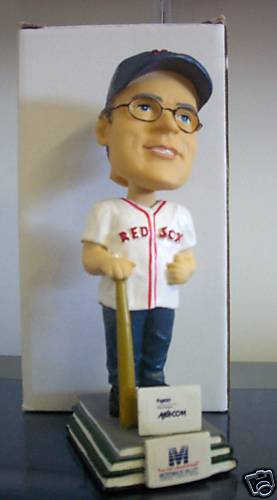
It's a Stephen King bobblehead.  The one in the picture was a give away -- now sells for $134.95.

I think he needs friends. . . Carrie bobblehead.  Flagg bobblehead.  Roland bobblehead.  Pennywise  bobblehead.  Cujo bobblehead.

He's pitching. . . but he's a writer.  Right?  Shouldn't he be writing?  I guess it doesn't look as cool to be hunched over a typewriter when you're a bobblehead.

Here's another one, (ebay for $64.99)