Do you read Cemetery Dance? I do! And the first place I turn is to Bev Vincnt's column. Even when there's a Stephen King story. I was absolutely thrilled when Mr. Vincen allowed me the opportunity to ask him a series of interview questions. This was really a gift of time on his part and I am supremely thankful.
On a personal note, this was exciting for me for two reasons. First, Mr. Vincent is one of my favorite authors about Stephen King. I've been using his book The Road to the Dark Tower as I read through the series again and have found it very helpful. His book The Stephen King Companion is all out fun!
Second, this gave me an opportunity to ask some questions about the Dark Tower and the Stephen King Universe that I've thinking about ever since I read The Dark Tower 7.
Bev Vincent's The Stephen King Illustrated Companion was nominated for a 2010 Edgar® Award as well as the 2009 Bram Stoker Award.
THE INTERVIEW
Talk Stephen King: Tell me a little about yourself. Do you focus primarily on King, or do you also write fiction?
Bev Vincent: I’m originally from eastern Canada, though I’ve been living in Texas since 1989. In 2012, I became a dual citizen.
I write just about everything: non-fiction, book reviews, essays, blogs, short stories and novels. After a long hiatus from writing, I started working on short stories in 1999 and had my first one published the following year. In 2001, Rich Chizmar at Cemetery Dance asked me if I would consider writing the Stephen King news column that appears in each issue of the magazine, and I’ve been doing that ever since. I’ve written three books to date and edited one (The Stephen King Illustrated Trivia Book). I’ve published over 70 short stories, hundreds of book reviews and dozens of essays.
Talk Stephen King: You have a doctorate in chemistry – which suggests you do a lot more than just write books about Stephen King! What else do you do?
Bev Vincent: I have a Ph. D. in chemistry from Dalhousie University in Halifax, Nova Scotia, Canada. My specialty is a type of analysis known as X-ray diffraction—specifically, X-ray crystallography. We shoot X-ray beams at crystals and analyze the scattering pattern to determine the molecular structure of the compound and how the molecules pack together to make the crystal. This type of analysis has many uses, and may practitioners have won Nobel Prizes for determining the structures of biologically interesting molecules using the method. The company I work for manufactures and sells the equipment and software used for a wide range of X-ray analysis techniques. That’s my so-called day job. I’ve worked for the same company for 23 years.
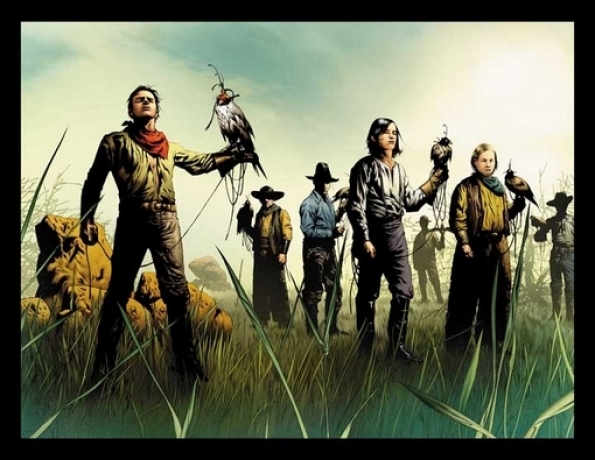

Talk Stephen King: I’ve been reading The Road to the Dark Tower as I read through the Dark Tower novels. I saw you have a new companion book to the Dark Tower coming out (The Dark Tower Companion). How is it different from The Road to the Dark Tower?

However, it starts off generally. What is Mid-World? What is the Dark Tower? Who is Roland? What is the nature of his quest? Questions of that sort. The chapters on the individual books are more self-contained, without much by way of forward-reaching spoilers.
The book has a comprehensive glossary of people, places and things, separated by those that are part of “our world” and those from Mid-World. It isn’t a Concordance (like Robin Furth’s). It doesn’t tell you on what pages you can find every mention of a character, although it does list the books in which a character (or place or thing) appears. The glossary tells you everything you might want to know about these entries, though.
This is the first book to address the Marvel adaptations and their place in the canon (or not). I look at each graphic novel series and underline the places where it provides new scenes or material, and the places where it diverges from or contradicts King’s novels. I also provide summaries of the extra material found in each issue for people who haven’t read the graphic novels.
 I interviewed a lot of people for the book. Stephen King told me a few things about the series that he’s never said before. Ron Howard and Akiva Goldsman explained in detail how they plan to adapt the books to film and television if they can find a partner willing to fund the project. Brian Stark discusses the Discordia interactive game on King’s website. I also interviewed Robin Furth about the Marvel adaptation, as well as most of the major artistic contributors: illustrator Jae Lee, colorist Richard Isanove, scripter Peter David and several artists who stepped in after Jae Lee left the project.
There’s a chapter on the history of Mid-World and another on its geography. I tried my hand at creating a map of the parts of Mid-World that we know from the books, and I was surprised at how neatly it came together. Information from The Wind Through the Keyhole helped place a lot of it in context (the relative location of Gilead, for example) and, despite some contradictions within the text and the variable nature of direction and distance in Mid-World, it all came together nicely. I’m nobody’s cartographer, but I think people will be interested by the map. I also created a Dark Tower tour guide to Manhattan, which points out as many of the places in the city that are mentioned in the series as I could, along with a second map.
The book is 50% longer than The Road to the Dark Tower and, unlike the first book, is completely footnote-free! And it’s all new text.
Talk Stephen King: My favorite Stephen King companion book is The Stephen King Illustrated Companion. Not only is the text great, but it is full of reproductions of first drafts and early copies of the manuscripts. How did that book come together?
Bev Vincent: That was a fascinating and fun project that came to me out of the blue. The book chain Barnes & Noble had published reader’s companions to Poe and Jane Austen and decided they wanted to do one on King. They reached out to the same book packager who had done the previous books, a company called becker&mayer! that specializes in design-heavy books. Their editor contacted me on the strength of The Road to the Dark Tower and asked if I would be interested in writing the book’s text.

Once I chose the books and had my outline approved by the editor and Barnes & Noble, it was simply a matter of writing the text, which took about six weeks. I finished ahead of schedule, which meant that the documents specialist had the full text to work from when selecting the photographs and other accompanying materials that are a hallmark of their reader’s companions. These books aren’t simply read—they’re experienced. You can spend hours with one and never read a word of the text! We obtained King’s permission to search his archives at the University of Maine and reproduce anything we wanted. King had veto power, but he never employed it. He also provided access to a personal photo album. The book became a real treasure trove of never-before-seen material. The fact that it was so handsomely produced and inexpensive means that it was available to anyone who wanted it. It sold so well, there was a second printing within about a year. Sadly, it’s now out of print, but I have hopes that B&N will bring it back out again in the future.
One interesting spin-off from the book is that I was interviewed extensively for an updated version of the King profile for the Biography Channel. The person who interviewed me for it drew a lot of material from the book. Her copy was full of post-it notes and book marks. This version is only available internationally—it never airs in the US.
Talk Stephen King: Do you have some favorite non-King writers?
Bev Vincent: Indeed I have many. So many that my mind freezes whenever I’m asked the question. I read a lot of crime fiction by authors like Ian Rankin, Jonathan Kellerman, Lawrence Block, Michael Connelly, Kate Atkinson, George Pelecanos and Dennis Lehane. I read Alexander McCall Smith’s novels to my wife, along with the humorous essays of fellow Canadian Stuart McLean. I don’t read a lot of horror and very little science fiction and fantasy these days, though I once did.
I’ll read anything Peter Straub, Dan Simmons, Ian McEwen and Graham Joyce publish. I’ve lately become fond of foreign crime writers like Jo Nesbo, Steig Larsson, Natsuo Kirino and Keigo Higashino. I’m currently reading NOS4A2 by Joe Hill, and I really liked Owen King’s debut novel, Double Feature, which will be out in April. I’ve been enjoying Justin Cronin’s trilogy, am a fan of Stephen R. Donaldson’s fantasy series, and am challenged by the novels of Umberto Eco. To get an idea of what I’ve read over the past several years, check out my review page: www.onyxreviews.com
Talk Stephen King: Do you have a favorite Dark Tower book?
Bev Vincent: I have a hard time making top ten lists or picking favorites. My mind doesn’t work that way. However, that said, I would have to choose The Gunslinger as my favorite.
Talk Stephen King: Why?
Bev Vincent: I know that wouldn’t be the obvious choice—a lot of people haven’t gotten into the Dark Tower series because that can be a difficult book—but I love it for the overall mood it casts. I first read it in 1984 and for a number of years it was the only Dark Tower book. I’ve read it many times over the years. It’s compact and dense, the protagonist isn’t terribly likable, but it has this haunting aura that charmed me.

Talk Stephen King: A favorite non-Tower King book?
Bev Vincent: When I’m asked this question, I almost always think of Bag of Bones, his first book with Scribner, and its bookend partner, Lisey’s Story. I consider them a matching set. The writer without his wife; the wife without the writer. There’s a lot going on in Bag of Bones that makes it feel like a highly personal novel. I was also impressed by the writing process—how King wove in a crucial subplot that wasn’t present in the first draft. It becomes one of the most important facets of the story, but King put it in like an artist painting highlights on a nearly finished works. Little daubs of paint here and there. It was a lesson in the craft of writing.
Talk Stephen King: Is there any Stephen King book you just don’t like or couldn’t make it through?
Bev Vincent: None that I couldn’t make it through, but a few that I dislike. I enjoyed the opening section of The Tommyknockers. I liked Bobbi and Gard a lot and was frustrated when King abandoned them for hundreds of pages to tell us about all these other people about whom I cared not a whit. I kept wanting to get back to Bobbi and Gard, which made it feel like I was just flipping pages. King thinks people missed the point on Needful Things, but my problem with the book is that it was missing the key element present in the rest of his work: likable characters. I hardly liked anyone in that book. And the wonky pseudoscience in Cell wrecked the book for me. It’s fine to have wibbly wobbly bits in a book so long as the story doesn’t rely on them. The whole “save to disk and reboot” concept didn’t hold water, so I couldn’t enjoy the book.
. . . . . . . . . . . . . . . . . . . . . . . . . . . . . . . . . . . . . .
PART TWO WILL POST JANUARY 2, 2013
. . . . . . . . . . . . . . . . . . . . . . . . . . . . . . . . . . . . . .
Check out Bev Vincent's website at www.bevvincent.com