

Showing posts with label The Dark Tower Companion. Show all posts
Showing posts with label The Dark Tower Companion. Show all posts


Interview with BEV VINCENT part 2
This is part 2 of my interview with Bev Vincent, author of The Road To The Dark Tower.
You can read part 1 of the interview at talkstephenking.blogspot.com.
Talk Stephen King: Twenty-First Century King is a collection of reviews about King’s work. Does 21st century mean that the reviews were written by you since the year 2000, or that the books reviewed were all written after 2000? Can you tell us more about this book?
 Bev Vincent: The books reviewed were all published after 1999. Brian Freeman at Cemetery Dance asked if I would be interested in doing a chapbook that collects my reviews of King’s work. When I started to assemble the text, I tried to come up with a theme. Since 1999 was such an important year in King’s life, with the near-fatal accident, I decided to focus on things published after that, starting with “Riding the Bullet” and ending with The Wind Through the Keyhole. I ended up with 21 reviews, and the manuscript came in at 21,000 words, so it seemed like there was some sort of synchrony at work. The 50-page chapbook has a nice glossy cover and was beautifully designed by the folks at CD. It’s limited to 750 copies, and every one is signed by me.
Talk Stephen King: You discussed recently in a blog post what you called "Narrative lapses and shortcuts." When an author messes up their story with inconsistencies. Do you spot many of these when reading King?
Bev Vincent: The Dark Tower series is almost a study in narrative lapses! There are so many continuity errors in the early books (which were never copy edited prior to publication) that King decided to use some of them as an important component of the story. Others he simply ignored, such as character names that change from one page to the next or from one book to the next.
In that essay, I discussed characters who do things without sufficient motivation, or storytellers who drop important threads. I don’t observe things like that too often in King’s works, in part because he has fearsome editors who put his work under close scrutiny and catch any of these potential lapses or errors. People might complain about the odd typo or factual error that gets past everyone (the misspelling of Killeen throughout 11/22/63, for example, or gaffes involving the details of guns that King often makes), but in terms of dropping the ball narratively, I don’t see that in his work. He’s such a natural and intuitive storyteller that seems to know how to handle all the threads of the tale and when it’s time to come back to something.
My biggest complaint about something he does every now and then is that he has a narrator hide something from the reader. I remember this specifically in From a Buick 8 but it has happened elsewhere. A first person narrator details his movements step by step until he puts something in his pocket. The narrator doesn’t say what that is, because King wants it to be a surprise when it comes into play later, but in my opinion that’s cheating. Not playing fair.
Talk Stephen King: Are you a Dark Tower purist? Does it bother you when King revises the Dark Tower stories? Were changes made to the entire series, or only to the first novel?
Bev Vincent: I’m not a purist. I don’t mind when changes are made to books when they’re adapted to film, for example, though I know that it disturbs a lot of people, especially when the changes seem arbitrary. I don’t always agree with the changes King makes. I think it was a mistake to move The Stand forward a decade when he issued the restored edition in 1990. I know that he wanted to include echoes from the AIDS crisis, but he created so many anachronisms that it didn’t seem like a wise decision. A babysitter who was paid a dollar for an evening might have made sense in the 1970s, but it certainly didn’t fifteen years later.

To date, The Gunslinger is the only book in the series that he has revised. Every now and then he says he wants to go back over the whole thing and smooth it out, but I doubt he’ll do that. In fact, I asked him about that specifically during the interview for The Dark Tower Companion, but you’ll have to wait for the book to come out to hear what he said!
Talk Stephen King: We know that the Dark Tower reaches far beyond the pages of the eight books King has written that bear the title "A Dark Tower Novel." Does the Tower extend into the works of authors other than Stephen King? (For instance, Has Straub ever referenced it?)
Bev Vincent: Without King’s permission, other authors couldn’t do that. The characters are King’s intellectual property and he doesn’t often let other people play in his sandbox. It was Straub’s idea to incorporate Dark Tower elements into Black House, the sequel to The Talisman, which was written at a time when almost everything King worked on was steeped in Dark Tower mythos. So, in a way, Straub has “referenced” it. There is one element that goes in the other direction, though. Bango Skank, the never-seen graffiti artist from the Dark Tower series first appeared in a Straub story, “The Buffalo Hunter.” He and King talked about using the character in The Talisman, but they never did. With Straub’s permission, Bango Skank became a semi-regular apparition in the Dark Tower series.
Talk Stephen King: You interviewed Stephen King for The Dark Tower Companion. What was that like?
Bev Vincent: I’ve known King since about 1997, though the first time I met him was at a signing in Houston in 1988. We’ve corresponded off and on over the years, and I’ve met him on a number of occasions, most recently at the world premiere of Ghost Brothers of Darkland County. We watch some of the same TV series (Sons of Anarchy and Dexter, for example) and read a number of the same authors, so we sometimes discuss these things. But I’ve never interviewed him before. I asked him the occasional question by e-mail while working on The Road to the Dark Tower, but never a formal live interview. It all went very well, though. I got some great quotes, and he knows how to manage the allotted time to best effect.
Talk Stephen King: Does the book come with his blessing, or is this "unauthorized"?
Bev Vincent: I would call all three books authorized in that I have always sought King’s “blessing” to do them and he has participated to some extent in all of them. For The Road to the Dark Tower, he provided the manuscripts of the final three books two years before they were published so my book could come out soon after The Dark Tower. Then he provided a generous quote for the cover. Then he allowed us to reproduce all that rare material for The Stephen King Illustrated Companion. For the new book, he provided an early manuscript of The Wind Through the Keyhole and again supplied a cover quote.
Talk Stephen King: The Dark Tower movie is on – then off – then on. (I honestly can’t remember at the moment where it is!) How well do you think The Dark Tower will translate to film?
Bev Vincent: It’s on hold, pending funding. Akiva Goldsman wrote a script that was with Universal for a long time. When they declined, he wrote a new version for Warner Bros. Ultimately they passed, too. The next day another company declared their interest in backing the project, but I’ve heard nothing concrete since then.
It’s a difficult project. For one thing, it isn’t ingrained in culture the way The Lord of the Rings and The Hobbit are. It’s difficult to summarize in a way that describes exactly what it’s all about. I spoke with Ron Howard about his ideas, and was fascinated by the concept they had come up with. It wasn’t one that was going to make everyone happy but, as I said before, I’m not a purist, so I was eager to see it. Then I talked with Akiva Goldsman at greater length for The Dark Tower Companion. He was the person who brought the series to Howard and convinced him it would make a fantastic series. I still hope they will get to do it. It’s an innovative approach in that it combines both the big scope of the cinema and the narrow, personal focus of television.

This final question and answer concerns the last Dark Tower novel and the conclusion to the series. If you haven't read it. . . you've been warned.
Talk Stephen King: I have a nerd question that I have to ask about the Dark Tower. You are welcome to banish me to the wastelands for asking. I know you are not the author, but maybe you can explain: Throughout the series we are given the impression that the universe is breaking down, and at a greater speed until Roland reaches the Dark Tower. There is a sense of impending doom unless he gets there quick enough. However, when he gets there. . . he just resets into the desert. Wouldn’t his failure to complete the mission cause something really bad to happen? Have I misunderstood something essential in the Dark Tower?
Bev Vincent: I talk about this at some length in The Dark Tower Companion in a chapter called “The End and What It Might Mean.” That title indicates that it’s definitely open to interpretation. Here are my thoughts in a nutshell: Roland does not have to reach the Dark Tower—he has to save it from destruction. He wants to reach the Dark Tower for personal reasons that are tainted by hubris. He wants to face whoever abides at the top of the Tower for a reckoning and, perhaps, so he can get this entity to take back all the bad things Roland had to do to get there. Roland’s ka-given task is essentially complete when he frees the Breakers from Algul Siento. The stress on the Beams is removed and they will begin to heal. Some of the broken ones may even regenerate.
The Crimson King is trapped outside the Tower, though, and he has proven his ability to wreak havoc even from that perch, so it is perfectly understandable that Roland feels the need to dispatch or banish him, too. So, maybe he does have to go to the Tower after all. Once he eliminates the Crimson King, though, my feeling is that he should say his prayers and utter the names of all those he sacrificed along the way, and the turn on his heel and go away. I think of him returning to Calla Bryn Sturgis to spend the rest of his natural days with Rosalita. Maybe he’d be the town sheriff or maybe he’d grow beans. His fatal flaw is that he always enters the Tower. He allows pride to rule him, and he is punished for this. Doomed to repeat and repeat and repeat until he “gets it right.”
For an alternate take on this element of King’s philosophy (something that shows up in other works, such as Kingdom Hospital), listen to his reading of the short story “Afterlife” from his December 2012 appearance at UMass Lowell.
THANK YOU BEV VINCENT!
Check out Bev Vincnt's website at www.bevvincent.com
Interview With Bev Vincent part 1

Do you read Cemetery Dance? I do! And the first place I turn is to Bev Vincnt's column. Even when there's a Stephen King story. I was absolutely thrilled when Mr. Vincen allowed me the opportunity to ask him a series of interview questions. This was really a gift of time on his part and I am supremely thankful.
On a personal note, this was exciting for me for two reasons. First, Mr. Vincent is one of my favorite authors about Stephen King. I've been using his book The Road to the Dark Tower as I read through the series again and have found it very helpful. His book The Stephen King Companion is all out fun!
Second, this gave me an opportunity to ask some questions about the Dark Tower and the Stephen King Universe that I've thinking about ever since I read The Dark Tower 7.
Bev Vincent's The Stephen King Illustrated Companion was nominated for a 2010 Edgar® Award as well as the 2009 Bram Stoker Award.
THE INTERVIEW
Talk Stephen King: Tell me a little about yourself. Do you focus primarily on King, or do you also write fiction?
Bev Vincent: I’m originally from eastern Canada, though I’ve been living in Texas since 1989. In 2012, I became a dual citizen.
I write just about everything: non-fiction, book reviews, essays, blogs, short stories and novels. After a long hiatus from writing, I started working on short stories in 1999 and had my first one published the following year. In 2001, Rich Chizmar at Cemetery Dance asked me if I would consider writing the Stephen King news column that appears in each issue of the magazine, and I’ve been doing that ever since. I’ve written three books to date and edited one (The Stephen King Illustrated Trivia Book). I’ve published over 70 short stories, hundreds of book reviews and dozens of essays.
Talk Stephen King: You have a doctorate in chemistry – which suggests you do a lot more than just write books about Stephen King! What else do you do?
Bev Vincent: I have a Ph. D. in chemistry from Dalhousie University in Halifax, Nova Scotia, Canada. My specialty is a type of analysis known as X-ray diffraction—specifically, X-ray crystallography. We shoot X-ray beams at crystals and analyze the scattering pattern to determine the molecular structure of the compound and how the molecules pack together to make the crystal. This type of analysis has many uses, and may practitioners have won Nobel Prizes for determining the structures of biologically interesting molecules using the method. The company I work for manufactures and sells the equipment and software used for a wide range of X-ray analysis techniques. That’s my so-called day job. I’ve worked for the same company for 23 years.
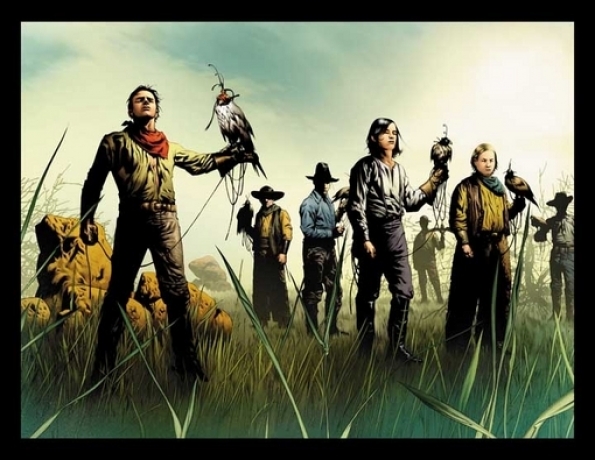

Talk Stephen King: I’ve been reading The Road to the Dark Tower as I read through the Dark Tower novels. I saw you have a new companion book to the Dark Tower coming out (The Dark Tower Companion). How is it different from The Road to the Dark Tower?

However, it starts off generally. What is Mid-World? What is the Dark Tower? Who is Roland? What is the nature of his quest? Questions of that sort. The chapters on the individual books are more self-contained, without much by way of forward-reaching spoilers.
The book has a comprehensive glossary of people, places and things, separated by those that are part of “our world” and those from Mid-World. It isn’t a Concordance (like Robin Furth’s). It doesn’t tell you on what pages you can find every mention of a character, although it does list the books in which a character (or place or thing) appears. The glossary tells you everything you might want to know about these entries, though.
This is the first book to address the Marvel adaptations and their place in the canon (or not). I look at each graphic novel series and underline the places where it provides new scenes or material, and the places where it diverges from or contradicts King’s novels. I also provide summaries of the extra material found in each issue for people who haven’t read the graphic novels.
 I interviewed a lot of people for the book. Stephen King told me a few things about the series that he’s never said before. Ron Howard and Akiva Goldsman explained in detail how they plan to adapt the books to film and television if they can find a partner willing to fund the project. Brian Stark discusses the Discordia interactive game on King’s website. I also interviewed Robin Furth about the Marvel adaptation, as well as most of the major artistic contributors: illustrator Jae Lee, colorist Richard Isanove, scripter Peter David and several artists who stepped in after Jae Lee left the project.
There’s a chapter on the history of Mid-World and another on its geography. I tried my hand at creating a map of the parts of Mid-World that we know from the books, and I was surprised at how neatly it came together. Information from The Wind Through the Keyhole helped place a lot of it in context (the relative location of Gilead, for example) and, despite some contradictions within the text and the variable nature of direction and distance in Mid-World, it all came together nicely. I’m nobody’s cartographer, but I think people will be interested by the map. I also created a Dark Tower tour guide to Manhattan, which points out as many of the places in the city that are mentioned in the series as I could, along with a second map.
The book is 50% longer than The Road to the Dark Tower and, unlike the first book, is completely footnote-free! And it’s all new text.
Talk Stephen King: My favorite Stephen King companion book is The Stephen King Illustrated Companion. Not only is the text great, but it is full of reproductions of first drafts and early copies of the manuscripts. How did that book come together?
Bev Vincent: That was a fascinating and fun project that came to me out of the blue. The book chain Barnes & Noble had published reader’s companions to Poe and Jane Austen and decided they wanted to do one on King. They reached out to the same book packager who had done the previous books, a company called becker&mayer! that specializes in design-heavy books. Their editor contacted me on the strength of The Road to the Dark Tower and asked if I would be interested in writing the book’s text.

Once I chose the books and had my outline approved by the editor and Barnes & Noble, it was simply a matter of writing the text, which took about six weeks. I finished ahead of schedule, which meant that the documents specialist had the full text to work from when selecting the photographs and other accompanying materials that are a hallmark of their reader’s companions. These books aren’t simply read—they’re experienced. You can spend hours with one and never read a word of the text! We obtained King’s permission to search his archives at the University of Maine and reproduce anything we wanted. King had veto power, but he never employed it. He also provided access to a personal photo album. The book became a real treasure trove of never-before-seen material. The fact that it was so handsomely produced and inexpensive means that it was available to anyone who wanted it. It sold so well, there was a second printing within about a year. Sadly, it’s now out of print, but I have hopes that B&N will bring it back out again in the future.
One interesting spin-off from the book is that I was interviewed extensively for an updated version of the King profile for the Biography Channel. The person who interviewed me for it drew a lot of material from the book. Her copy was full of post-it notes and book marks. This version is only available internationally—it never airs in the US.
Talk Stephen King: Do you have some favorite non-King writers?
Bev Vincent: Indeed I have many. So many that my mind freezes whenever I’m asked the question. I read a lot of crime fiction by authors like Ian Rankin, Jonathan Kellerman, Lawrence Block, Michael Connelly, Kate Atkinson, George Pelecanos and Dennis Lehane. I read Alexander McCall Smith’s novels to my wife, along with the humorous essays of fellow Canadian Stuart McLean. I don’t read a lot of horror and very little science fiction and fantasy these days, though I once did.
I’ll read anything Peter Straub, Dan Simmons, Ian McEwen and Graham Joyce publish. I’ve lately become fond of foreign crime writers like Jo Nesbo, Steig Larsson, Natsuo Kirino and Keigo Higashino. I’m currently reading NOS4A2 by Joe Hill, and I really liked Owen King’s debut novel, Double Feature, which will be out in April. I’ve been enjoying Justin Cronin’s trilogy, am a fan of Stephen R. Donaldson’s fantasy series, and am challenged by the novels of Umberto Eco. To get an idea of what I’ve read over the past several years, check out my review page: www.onyxreviews.com
Talk Stephen King: Do you have a favorite Dark Tower book?
Bev Vincent: I have a hard time making top ten lists or picking favorites. My mind doesn’t work that way. However, that said, I would have to choose The Gunslinger as my favorite.
Talk Stephen King: Why?
Bev Vincent: I know that wouldn’t be the obvious choice—a lot of people haven’t gotten into the Dark Tower series because that can be a difficult book—but I love it for the overall mood it casts. I first read it in 1984 and for a number of years it was the only Dark Tower book. I’ve read it many times over the years. It’s compact and dense, the protagonist isn’t terribly likable, but it has this haunting aura that charmed me.

Talk Stephen King: A favorite non-Tower King book?
Bev Vincent: When I’m asked this question, I almost always think of Bag of Bones, his first book with Scribner, and its bookend partner, Lisey’s Story. I consider them a matching set. The writer without his wife; the wife without the writer. There’s a lot going on in Bag of Bones that makes it feel like a highly personal novel. I was also impressed by the writing process—how King wove in a crucial subplot that wasn’t present in the first draft. It becomes one of the most important facets of the story, but King put it in like an artist painting highlights on a nearly finished works. Little daubs of paint here and there. It was a lesson in the craft of writing.
Talk Stephen King: Is there any Stephen King book you just don’t like or couldn’t make it through?
Bev Vincent: None that I couldn’t make it through, but a few that I dislike. I enjoyed the opening section of The Tommyknockers. I liked Bobbi and Gard a lot and was frustrated when King abandoned them for hundreds of pages to tell us about all these other people about whom I cared not a whit. I kept wanting to get back to Bobbi and Gard, which made it feel like I was just flipping pages. King thinks people missed the point on Needful Things, but my problem with the book is that it was missing the key element present in the rest of his work: likable characters. I hardly liked anyone in that book. And the wonky pseudoscience in Cell wrecked the book for me. It’s fine to have wibbly wobbly bits in a book so long as the story doesn’t rely on them. The whole “save to disk and reboot” concept didn’t hold water, so I couldn’t enjoy the book.
. . . . . . . . . . . . . . . . . . . . . . . . . . . . . . . . . . . . . .
PART TWO WILL POST JANUARY 2, 2013
. . . . . . . . . . . . . . . . . . . . . . . . . . . . . . . . . . . . . .
Check out Bev Vincent's website at www.bevvincent.com
Liljas Library: A New Dark Tower Companion On The Way
EXCITING NEWS! This is from my favorite Stephen King website, Lilja's Library -- which is always fantastic!

Bev Vincent has announced his new book: The Dark Tower Companion. Here is what he writes:
Read more here.
The Dark Tower Companion announced
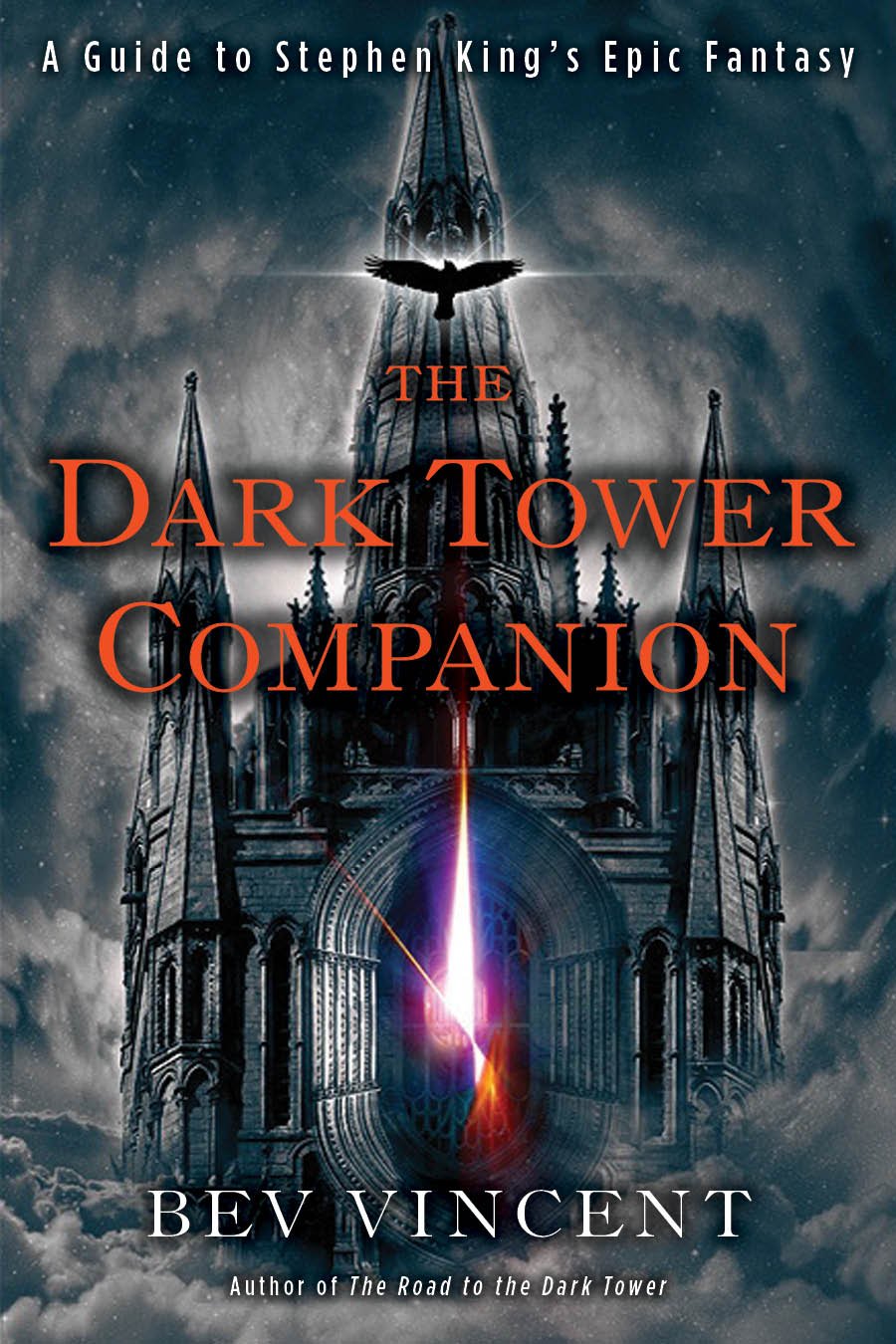
Bev Vincent has announced his new book: The Dark Tower Companion. Here is what he writes:
I’ve been a little coy about what I’m working on, but it’s time to announce my third book. The Dark Tower Companion will be published by New American Library (Penguin) in April. This massive companion is 50% longer than The Road to the Dark Tower. It covers not only the eight books of King’s series, but also the Marvel graphic novel adaptations. I interviewed King for the book, along with Robin Furth, Richard Isanove (colorist), Peter David (script), Jae Lee (artist) and most of the subsequent artists.
I also, much to my great delight, got to talk with Ron Howard and Akiva Goldsman about how they plan to adapt the series. Click on the image to see a full-sized version of the great cover by Spanish artist Nekro.
Subscribe to:
Posts (Atom)


