Showing posts with label Reviews. Show all posts

CBS The Stand: We're On The Titanic


How many times have we heard this year, "We're all in this together" ?  Well, I'm afraid when it comes to the Stand, we are all having the same frustrating experience.  At some point (think around episode 2) this big beautiful boat hit an iceberg and we're now all on a sinking ship. 

CBS has put a lot of time and effort into offering Stephen King fans a plate of trash.  I was so excited with the first episode, endured the second, and am ready to cancel CBS after the third.  After watching the latest gob of mush, I finally decided to open my eyes and see what others were saying.  Am I the only one who hates this?  What I found was -- I'm not alone.

In fact, after reading article after article expressing similar frustrations, I started looking for someone who enjoyed this.  Some reviews found some entertaining moments, but no one seems blown away.  Even Lilja at struggled to find positive notes in his spoiler free review. (liljas-library.com)  Surprised, I turned to the ever-fan at thetruthinsidethelie.blogspot.com.  Stuff I hate, Bryant and usually find hope in.  But when it comes to this version of the Stand, we all seem to be on the same sinking ship. "Thus far, The Stand has failed utterly to establish that it is the "present" which is the real story."  He notes the timeline is "sloppily connected." (Well said.)

Stephen King has rightly pointed out that no movie can really "ruin" his book, since the book is right there for you to read any time you want.  Which might be what I end up doing.  That, and canceling CBS. 

hollywoodreporter: CBS All Access' new adaptation of The Stand is a car on cinderblocks. It looks great. If you glance under the hood, you can see all of the work that's been done on the engine. But no matter how ready it seems to peel out onto the road, it isn't going anywhere. Very rarely is the Benjamin Cavell-steered adaptation, with Josh Boone directing the pilot, actively bad, but it's very frustrating.

Rotten Tomatoes: Critics Consensus: Despite an A-list ensemble and a smattering of poignant moments, The Stand's extended runtime doesn't make for better storytelling, leaving its expansive cast stranded in a cluttered apocalypse.

rogerebert.com: Most damningly, there’s no sense of the world’s descent into madness, no seeping dread, no unbearable builds of tension; “The Stand” hits you with the glowing eyes of evil and the mystical wisdom of the “magical old black lady” (the show’s description, not mine) early and often, leaving subtlety in the dust.

www.vulture.comWhile there are some genuinely effective attempts to generate suspense, those sequences stand beside some of the wildest and most off-the-mark sections of the series,

indiewire.com: in an article titled, "‘The Stand’ Review: Stephen King’s CBS All Access Adaptation Is a Plague Unto Itself": Even more debilitating is the realization these flashbacks are going to keep happening every time we meet a new character. “The Stand” is famous for having a massive cast, and while jumping ahead in time so we can get past the pandemic is a sound instinct — the show’s viral outbreak is close enough to reality to remind viewers what’s going on outside, but far too extreme to provide meaningful parallels — repeatedly going back in time kills forward momentum. And it doesn’t help that all these flashbacks fail to set up any intriguing “how did they get from here to there” teases.

and: It is also miscast, in nearly every role. “The Stand” isn’t bolstered by a fleet of skilled actors so much as it’s hindered by watching those proven talents struggle to find a credible tone within the series’ cleaned-up TV sheen and dirty allegory for good vs. evil.

CNN notes, 'The Stand' turns Stephen King's epic book into what feels like a very long sit." And Collider headlines their article, "'The Stand' Review: A Sprawling Apocalypse Epic That Trips on Its Own Ambition."

USA Today said, "CBS All Access makes a -- mess out of Stephen King's epic." I think this form the USA Today article nails everyone's frustration: :The most troublesome problem with "Stand" is the decision to jump around in the timeline, starting not at the pandemic that destroys humanity but in the middle of a new society that sprang up after it. Working backward (and then forward, and then backward again), the episodes struggle to clearly explain what happened with "Captain Tripps," a lethal super flu accidentally released from a military facility. Most plot developments and characterizations are implied rather than filmed, making this "Stand" more confusing than anything else."

The Outsider, Lilja Speaks


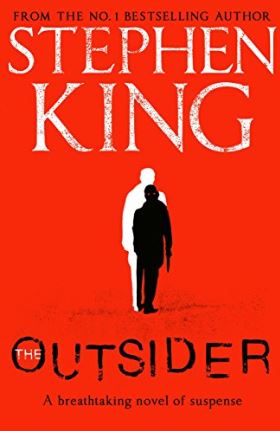
My favorite Stephen King website has posted a great review of the upcoming Stephen King book, the Outsider.

"I love it," Lilja writes.

Check out the full review here: (liljas-library.com)


CARRIE- THE REMAKE. 2013. REVIEW BY SANDRA HARRIS.


I enjoyed Sandra Harris' review of the 2013 Carrie.  She kindly allowed me to repost her review here.  Check out Sandra's blog, it's full of some great movie reviews.


reposted with permission:  
sandrafirstruleoffilmclubharris.wordpress.com

CARRIE- THE REMAKE. 2013.
BASED ON THE BOOK BY STEPHEN KING.
DIRECTED BY KIMBERLY PEIRCE.
STARRING CHLOË GRACE MORETZ, JULIANNE MOORE, JUDY GREER, GABRIELLA WILDE, ANSEL ELGORT, ALEX RUSSELL AND PORTIA DOUBLEDAY.
REVIEW BY SANDRA HARRIS.

This is the reworking of Brian De Palma’s classic 1976 film adaptation of Stephen King’s novel, CARRIE. The book was Stephen King’s first major success and some people still regard it as one of his best works, along with THE SHINING, PET SEMATARY, SALEM’S LOT, IT, MISERY and CHRISTINE.

Sissy Spacek was unforgettable and perfectly cast in the original film as the lonely, socially awkward Carrie White, whose single mom Margaret is a religious fanatic with violent tendencies and mental problems that have clearly gone untreated for some time.

While Sissy Spacek is a hard act to follow, newcomer to the role Chloë Grace Moretz certainly gives it her best shot. She’s a beautiful young woman with a fabulous head of strawberry blonde hair and I actually think she does a good enough job in the remake, which seems to be a straightforward take-for-take reimagining of the original movie.

Julianne Moore plays Mommie Dearest this time around. As I’m a big fan of hers, I actually prefer her to Piper Laurie. It’s nothing personal, I just love Julianne Moore, that’s all. She’s gorgeous and I loved her in such films as HANNIBAL, THE END OF THE AFFAIR and JURASSIC PARK 2- THE LOST WORLD.

She really works the role of the self-harming Margaret White. It’s horrible to watch her banging her head off the wall, hitting herself in the face and stabbing herself in the leg with scissors. The two leads also really look like mother and daughter, which certainly helps.

What I don’t like about the remake is the fact that it’s inevitably set in a much more modern and technologically-advanced world than the one in which Stephen King initially wrote it, but that’s not the film’s fault. It’s now the era of boring old cellphones, so the remake is full of the bloody things.

The famous scene in which an hysterical Carrie gets her first period in the school showers after gym class is actually filmed by the little bitches in her class on their cellphones and uploaded to the Internet. They all think that Carrie’s ignorance of what’s happening to her body is a big hilarious joke and they can’t wait to share that joke with the rest of the world.

They don’t know, of course, that they’re sealing their ultimate, terrible fate with every act of nastiness they commit against the telekinetic Carrie, who has the power to move people and objects with the force of her mind. Her powers have been considerably ramped up for this remake. Books and knives and all sorts of households objects spend half the film flying around the place.

Carrie can fly now too, a little bit, and she has the ability to fling her crazy mom through the air and slam her into the wall or into the dreaded ‘prayer-closet,’ the one with all the Jesus statues and pictures, etc. Carrie’s extra powers are accompanied by a lot of arm-waving, finger-pointing and mad facial expressions as little Chloë hams it up big-time in an effort to do the job well. She ends up looking a bit like Kate Bush in one of her early videos, but she still gets the job done, I think.

The ‘bucket of pig’s blood at the prom’ scene lacks a little of the sheer power (there’s that word again!) of the same scene in the first movie, and I prefer the original Tommy Ross and Billy Nolan to the chinless wonders (sorry, guys!) playing the parts this time around. The teacher, Miss Desjardins, is maybe slightly less effective than the teacher in the first film and, overall, I think I prefer the film when it’s set in the ‘Seventies. It has a grittier, more authentic feel to it, somehow.

Still, if a remake was unavoidable and seemingly it was, haha, I think that this is a perfectly decent effort. It does everything the first film does, just with a different cast and a more contemporary feel. Of course there’s a loss of atmosphere and it’s not as frightening, but I’m happy with the two female leads and I thoroughly enjoyed watching them take on these two iconic roles. I don’t know what more you can ask for, really.

* * * * * * * * * *

AUTHOR BIOGRAPHY OF SANDRA HARRIS.

Sandra Harris is a Dublin-based performance poet, novelist, film blogger, sex blogger and short story writer. She has given more than 200 performances of her comedy sex-and-relationship poems in different venues around Dublin, including The Irish Writers’ Centre, The International Bar, Toners’ Pub (Ireland’s Most Literary Pub), the Ha’penny Inn, Le Dernier Paradis at the Trinity Inn and The Strokestown Poetry Festival.

Her articles, short stories and poems have appeared in The Metro-Herald newspaper, Ireland’s Big Issues magazine, The Irish Daily Star, The Irish Daily Sun and The Boyne Berries literary journal. In August 2014, she won the ONE LOVELY BLOG award for her (lovely!) horror film review blog. She is addicted to buying books and has been known to bring home rain-washed tomes she finds on the street and give them a home.

She is the proud possessor of a pair of unfeasibly large bosoms. They have given her- and the people around her- infinite pleasure over the years. She adores the horror genre in all its forms and will swap you anything you like for Hammer Horror or JAWS memorabilia. She would also be a great person to chat to about the differences between the Director’s Cut and the Theatrical Cut of The Wicker Man.

reposted from: 
sandrafirstruleoffilmclubharris.wordpress.com

The Langoliers Miniseries


Watching the Langoliers on SyFy tonight. I read the novella at a breakneck speed in high school, and loved every bit of it. I mean, absolutely loved it!

For me, this mini-series falls flat -- very flat. It's not that it's bead, exactly, but it's empty -- hollow. a few reasons strike me as I watch this:

1. Length. The story worked as a novella. Might have worked as a 2 hour movie. But at four hours on Syfy, it's like a soap opera. Lots of talking, but a little thin on action. even the flashbacks become cumbersome. Unlike IT and The Stand and even Desperation, which lent themselves well tot he mini-series format, there's just not enough base material in the book. There are no supporting characters, since everyone on earth is gone. So it's just up to these few actors to carry the whole thing.

Each element of the story is introduced with the same energy as my daughter doing her math homework.

2. Special effects. I'm not going to say much about this because it's obvious, the special effects on this movie just aren't there. Or, more plainly, they suck.

Creepshows says: "With much of the budget being spent in other area's, Rubinstein decided against a star cast." I'm not seeing that budget anywhere!

Now, the power lines being crushed is pretty good. Once we get the pac-man's in the sky, the story loses all believability, as it now looks like a bad video game. My wife is cracking up as Craig is chased by the evil pac-man's!

The evil pac-man's remind me of the plant from Little Shop of Horrors, with its head detached.


3. Awkward! There are several scenes that are just absolutely awkward. Passengers introducing each other on the plane -- grown woman telling a kid about how she's going to visit a man she's never met -- and more. Even the kiss shared between Bethany and Albert

4. Dialogue. here's a great line, "The later it gets the later it gets." What?

Leaves me wondering: What happened here. Did anyone review this script? Did King sign off on this?

The story itself reminds me of a Twilight Zone episode. (Odyssey of flight 33)


Creepshows quotes King thusly from Fangoria, "I wasn't crazy about it. that was more of a TV thing. But given when it was, it was fine. The best thing about it was that it gave Tom Holland and Richard Rubinstein the bona fides they needed to get Spelling Productions to go ahead with Thinner." Right, because Thinner was such a . . . I'll stop now.

IMBD notes, "In the scene were Craig Toomey hallucinates that he is in a board meeting on the runway, the man at the head of the table asking him how much money he has made for the company is Stephen King." (www.imdb.com)

Jan 15, 2015: Check this out -- THANKS CHRIS!


The Blood-shed Weighs In On: YCKSK


Check out theblood-shed.com review of You Can't Kill Stephen King.

The review is hard to read because -- are you ready? -- there are no paragraph breaks at all.  It's one big block of text.  BAM!  It's like people who email me (usually women) who don't have any breaks in their thoughts.

That aside, the review is worth reading.

Here are some highlights:

  • The film is B beyond dispute but it has production polish.
  • The horror component isn’t compromised by the humor, a significant risk when mixing and matching fright with funny. 
  • The first kill is both classic and creative. -- its hash of humor and horror is well-balanced and effective. 
  • Even without the attention-snagging title there’s enough panache to make this more than mediocre. 
  • It’s not the Lawrence of Arabia of scary movies but it’s a good time nevertheless. 
  • All the best parts of a corpse-counter. 
  • If you’re paying attention you can hear the brooding opening music of Stanley Kubrick’s adaptation of The Shining show up briefly in this film’s score. The movie throws bloody obvious fanboy gags at the viewer with one hand while with the other hand deftly slipping in less forward references for the initiated. 

What They're Saying About REVIVAL


csmonitor.com: for the millions of us who keep ignoring Camus and Proust in favor of “Cujo” and “Carrie,” King scatters a few Easter eggs in “Revival.” Among them: references to the amusement park setting in his short novel “Joyland” and a setting in Maine near Castle Rock, King’s version of Yoknapatawpha County. This book isn’t as much fun as “Mr. Mercedes,” published way back in the summer of 2014, but King fans won’t lose any faith in his powers while breezing through “Revival.

nytimes.com: He does not ramble on, as he did with “Dreamcatcher” and “Duma Key,” which at 600-plus pages each both seemed endless. “Under the Dome,” his best behemoth of recent years, might have been 1,074 pages, but each one was worth it. “Revival” is much shorter, but it, too, is a well-built book that unfolds on a big canvas.

. . . and: “Revival” winds up with the idea that to be human, you must know what it is to be inhuman — and to know that only this thin partition separates that horror from ordinary life. So it’s not just a book that delivers its share of jolts and then lets the reader walk away unscathed. Older and wiser each time he writes, Mr. King has moved on from the physical fear that haunted him after he was struck by a van while out walking to a more metaphysical, universal terror. He writes about things so inevitable that he speaks to us all.

bostonglobe.com: Stephen King has taken a more expansive — and less apologetic — approach to describing the world. In book after book, he has poked, prodded, and thumbed open loopholes in the fabric of reality. He has questioned the mysterious, and then expanded on it in novels of fabulous and intensely wrought prose.

Lilja weighs in on REVIVAL


Check out my favorite Stephen King website, www.liljas-library.com.  He has posted a review of Revival.  Now, honestly, Lilja's reviews are my favorites because -- well, he actually understands Stephen King's work. He's always honest when something doesn't work; and is able  to spot unique things King does.  

I like this -- "the last 50 pages are really dark."

Check out the review for yourself.

MTV Pet Sematary Review


I like the reviews and interviews that are close to  when a project was made and there's still a lot of energy.

Does Maximum Overdrive Hold Up In 2014?


Well, there's not a lot to "hold up" when it comes to Maximum Overdrive.  The movie is campy fun; don't try to make it something more than that, okay?  Lots of things kill people in lots of ways.  It's not a political message or an attack on progress.

Dave Riedel at examiner.com recently reviewed the film.  I was interested to see what a 2014 review of the film would look like.  Riedel gave it 4 out of 5 stars.  His favorite line is "nicely done."  The acting is nicely done. The sets are nicely done.  I guess it's nice.

Riedel writes, "Overall Maximum Overdrive is a nicely done horror flick brought to you by the writer himself, Stephen King. The storyline is twisted as you would expect from King and translates to the screen pretty well. King fans, sci-fi, and horror fans will all likely enjoy this one."

Now rewind.  How was Maximum Overdrive seen in 1986?  Well, not nice.

Jon Pareles at nytimes.com was not quite so generous with King's directorial debut.  Here are some of my favorite lines:

  • Mr. King's movie of his own screenplay takes place in Wilmington, N.C., a locale that allows him to indulge almost every dumb-redneck stereotype.
  • the movie might be called ''Attack of the Killer Trucks''
  • For the most part, he has taken a promising notion - our dependence on our machines - and turned it into one long car-crunch movie, wheezing from setups to crackups.
Check out  AMC's Christine v. Maximum Overdrive.  (amctv.com/movie-blog)

Of course -- I really like this review:


And, for another more current review, this is from October 2014:


UPDATED: Big Driver, Let The Whining Begin

Don't you love it when a new Stephen King project comes out, and everyone gets their chance to complain?  I'll post my thoughts on Big Driver in a couple days -- until then, here's a summery Sara Stewart's whining from nypost.com.  Her article is titled, "Stephen King’s ‘Big Driver’ stuck in neutral."
  • Bello is an engaging presence, but she’s above this material. Ditto Ann Dowd. I can’t say as much for rocker Joan Jett, though it’s still a kick to see her brief appearance as a weathered barkeep with a glass eye.
  • “Big Driver” can’t seem to decide if it’s a straight-up thriller or a dark comedy about what writing about murder for years does to a person’s brain.
  • It’s a line King often walks with finesse in his stories, but doesn’t always survive the leap to the screen since he’s usually not writing the screenplay.
Stewart nails something that I mentioned when I first read the book; it's hard to believe Tess would respond the way she does to the scenario she's given.  Stewart writes:
There’s an essential implausibility to Tess’ reactions — and while it might, in a different genre, have been amusing to watch her developing an in-depth internal relationship with the voice in her GPS, the fact that it follows a traumatic rape feels way off, tonally.
I wrote in my journal entry about the NOVELLA:
 Tess' reasoning at several points still troubles me. Sorry to mention this. But I was not really convinced on her reason for not calling the police. And, her note to herself, "Don't get caught" . . . but she didn't really carry out much of a plan. She followed an emotion, but didn't execute a flawless play. Instead, she plans backward. that is, she carries out an idea, then figures out how to cover her tracks. 
While the story is dark, the ending is fantastic. King masterfully pulled the strands together. It is dark, but perhaps not as dark as some of the other novella's contained in FDNS.
By the way, I liked the Lifetime movie. More about that later.  What did y'all think?

UPDATED:
latimes.com Mary McNamara has her own share of whining, declaring that King "often" deals with the subject of rape in "long, graphically detailed and brutal scenes."  I wonder who she's been reading!

Check it out:
Carrie, no rape.
Christine, no rape.
Cujo, no rape.
The Shining, no rape.
Pet Sematary no rape.
The Green Mile, no rape.
. . . So what exactly is McNamara talking about?   Well, as is often true of the press these days, it's accusation an without any supporting evidence.

McNamara isn't done trashing King and Big Driver.  She writes, "If only it weren't such a disturbingly retro and sadistically sensationalized take on the subject. If only it were any good at all." And, "The story is simple, manipulative and ghastly." She goes on to say, "this story is so nonsensical that it, at best, exploits its subject matter and, at worst, insults it."  She calls Big Driver, "criminally limited material."  Criminally?  Now here's a reviewer who apparently just needs to just use words randomly without concern for their meaning. Big Driver has "CRIMINALLY limited material" ?

Know what the problem is -- McNamara, and many reviewers, are looking for King's "message" instead of looking for the STORY.  These reviewers aren't along for the ride, they're looking for a cause and a protest, and upset King did not set up a good rally for them.

A Good Marriage: Why Does Darcy Live In The Amityville House?


I'm sure there are spoilers here.  If you don't want spoilers, don't read reviews.

Approaching a movie with absolutely zero expectation can be a good  thing.  I have not read many other reviews of the movie because I spotted early on that it was getting a lot of negative press, and I didn't want to pick up on others complaints.  I want the whining to be my own.

The script, written by King, certainly has  the marks of a literary undertaking. Nice, tight, opening narration that is truly haunting.

I thought the main characters, Joan Allen as Darcy and Anthony LaPaglia as Bob played well against one another.  Early scenes make the "good marriage" almost a little -- too good.  But that's petty.

The scene where Darcy discovers the truth  is, indeed -- horrifying.  Music, tone, visuals, acting -- it all works.  The realization begins with the discovery of naughty magazines. . . but there's more for her to turn up.  Interesting, the scene's setting is exactly how I imagined it when I read the novel.  Of course, all that's really presented is the work bench.

When the full realization of what's going on settles on Darcy, the viewer feels her horror.  What I like about the  movie is that it plays with the theme much more than the book does.  What if an unsuspecting wife found out her husband was a terrible serial killer?  Here's what's fun about the movie: He knows she knows.  Of course, that's also what doesn't work!  Because a serial killer who has their nasty secret discovered isn't really too friendly about the situation.

There are moments you think, "How does Stephen King get inside a serial killers head."  The scary thing is, I don't think it's that hard.  Fleeting thoughts others have and (hopefully) push aside, writers more willingly embrace.  And then, when Bob the serial killer's secret is exposed and he thinks he can move on with  life with someone knowing his secret -- I think maybe King fell out of the serial killers head.  Our friend Mr. Bob doesn't seem bright enough to be a serial killer in the second half of the movie.  Not that they give an IQ exam when applying.

What seems unreal to me is just how quickly Bob fesses up.  Usually if a guy gets caught doing something -- especially something really bad -- he tries to worm his way out.  He doesn't go, "Hey, you were in my stash, and now you know I'm that bad guy.  But hey, we can still be cool, right?"  I don't think that's how it would work.  Do you?  And, to make it more unbelievable, it's not she who confronts him, leaving him speechless and confused with no explanation.  But he knows she knows before there is a confrontation. This gives him time to think things through and offer an excuse. Instead, he chooses confession.

Darcy doesn't plan and act fast enough.  This is not the Darcy we know from the novel; this is a very different woman.  She misses so many good opportunities.  She could stab him while he sleeps.  She could drop the car on him while he's working under it.  Why does she not movie faster?  She wanted to spare her children the pain.  And she needed time to plan.

A lot of the movie is flashes going through Darcy's head.  The newscaster talks to her; scenes are played out -- but in her imagination.  It gives the viewer pause when this is done more than once; is this really happening, or is the writer playing with me again?  It lessens suspense.  When something truly scary happens, the viewer is numb; is the camera going to pan out in a moment and we're just playing games in Darcy's head again?

There's a plot hole in A Good Marriage that King himself has addressed when discussing a stories plot.  "Why doesn't she just call the police?"  yeah. . . why?  I think the short answer is that she is afraid people will think she's in on it; that at the least she knew, and at the worst, she participated in the murders.  In fact, Bob uses exactly this logic on her.  So, instead, she carries out a murder of  her own.

Now consider -- in a house that could possibly soon be crawling with investigators, she commits murder.  Her not getting caught at that point is not a matter of how skillful  she is as a murder, but how skillful He is as a serial killer.  Any single clue he left behind at any crime scene could lead a massive police force into her home to investigate, and ultimately expose not only him, but her.  She cleans up the blood; forgetting police use a thing called luminol.  What she is counting on is that the police will  never follow Bob's trail home.  But doing away with him doesn't remove the clues he's left behind. Know what would be easier?  Calling the police.

When Darcy does act, it is great because the viewer doesn't know when it's going to come.  BAM!  How long will she wait?  How many opportunities will she pass up?

There is one case that I know of where a serial killer was outed by a family member; that's unabomber.

So there's a lot of whining here for me to conclude with this -- I liked it.  Yep, I did. I liked the book,  and I like the movie.  It's certainly not my favorite Stephen King movie, but is a good film.

There are three scenes I really enjoyed:
1. Darcy's discovery of naughty Bob.  Moving from the anger of finding a bad magazine to the real horror of who she is married to is powerfully portrayed.
2. The moment she acts.  The fight scene actually reminds me of Misery.
3. Her confession.  This part  I think works much better than the book.  The retired cop reveals how difficult it is going to be for her to put up with people talking about the "good ole days."  She will have to keep close to her heart the fact that Bob was actually a very naughty boy.

Favorite lines:
"I enjoy the hunt."
"I'm powerless over my nature."
"I'll just do it once, get it out of my head."
"All good things come to those who wait."
"Here I am Bobby, on top -- just the way you like it."
"Two can keep a secret, if one of them is dead."
"The only thing I have to do is pay my taxes.  It's not for me to punish you."
"You did the right thing."

What if. . .
Know what would have been a messed up Twilight Zone ending -- if she killed him and then after his funeral, the killing's began again. (No, I don't really want the story to make that turn.)

What I would have really liked -- if Darcy had been able to make him suffer just a little more.

Out of curiosity,

does Darcy's house


Look like this house?


Did Darcy ever  think, "Hey, maybe I'm living in the Amityville house with a serial killer."  no.  Okay.

Here's a note about the House I found interesting: 
This old off-white home, slightly creepy in its emptiness and subtle dilapidation, and yet a real potential gem with that backyard idyllic farm, caught the eye of location scouts. . . 
The house belongs to Historic Hudson Valley (you can tell because it enjoys the same new stretch of farm fencing) which wasn’t using it for anything lately. It used to house offices but has since become too deteriorated. So it’s a win for them to get the house fixed up and a win for the village, said Giaccio. (patch.com)

A Face Among The Masters lands another positive reivew


WHOO HOOO!  My book, Stephen King, A Face Among The Masters, was reviewwed at www.sfsite.com by Sandra Scholes.  She has previously reviewed other books about King, such as "A Brief Guide to Stephen King."

Scholes summerizes the book, noting unique features and offering her commentary along the way.  She notes that at the end of each chapter is a recommended book.  "After this chapter, Brighton David Gardner recommends Lord of the Flies by William Golding as the readers may like the book and notice its similarities. Gardner does this at the end of most of the chapters. I found it helpful to know that there are other books I would enjoy."


In particular, she seems to have liked the chapter on Alfred Hitchock.
One of the more interesting chapters is 4: Which Book Would Alfred Hitchcock Film? Hitchcock's movies are iconic; Psycho, North by Northwest and Vertigo stand out as popular ones. The meaning of this chapter is that if Hitchcock was alive today; there are certain novels by King he might like to turn into movies. Some of them, Cell, The Running Man, and Dolores Claiborne all have similarities to Hitchcock movies; therefore they are prime examples of the horror genre and ideal for his type of movie making. 
My favorite line, "Gardner makes what could have been an ordinary book about a writer a true pleasure to read."

amazon.com/Stephen-King-Face-Among-Masters

A Good Marriage lands a 5/10 From JoBlo

Lilja's Library pointed King fans to the first review of A Good Marriage, posted at joblo.com.  How'd it do?   Chris Bumbray gave it a five out of ten.

"Sadly," Bumray writes, "King's connection is really the only thing that distinguishes the movie from your run of the mill low budget thriller."

That's disappointing.  I had high hopes for this movie.  So, what will I do?  Ignore Bumray until I see the movie for myself.  As Bumray notes, "if you're a Stephen King completist you'll want to see this regardless. . . " YEP!

All That's Left to Know About the King of Horror on Film


Check out the www.horrortalk.com review of Scott Von Doviak's book, ""Stephen King Films FAQ: All That's Left to Know About the King of Horror on Film.

There  are over 100 titles based  on Stephen King's work.  Does that surprise the fan base?  Nope.  (The article refers to  the book as a "novel."  Of course, it's not a novel.)

Steve Pattee gives us the lay of the land, explaining that the first  part of the book reviews  the movies by decades, then it offers  individual sections forshorts; miniseries, TV series, and TV movies; sequels and remakes; and a final chapter for "oddities and ephemera", which is just what it sounds like: things that just couldn't fit in the other chapters.

Pattee writes:
I've read numerous books on film in the past, and there are two different types of writers. The first gives a brief synopsis of the film – maybe adding the actors and directors involved – before moving onto the next making it nothing more than a glorified list. The second type takes his or her time with each title, perhaps giving a background or personal thoughts in addition to the synopsis. I prefer this latter type, and in Stephen King Films FAQ, Von Doviak exceeds my expectations.


The DOME Is Back -- What Did You Think?


What did you think of tonight's episode of Under The Dome?

My favorite line: “Shut up and be dead, I’m busy.”

IGN's Matt Fowler posted a review of "Heads Will Roll."  (ign.com)  Fowler writes, that it is "painfully obvious that the first few minutes of this episode were an attempt to very quickly un-do a lot of the thick-headedness that dragged Season 1 down so drastically."

In his verdict, Fowler declares,
"Under the Dome" is definitely going for a new "no one is safe" vibe. Though it would help of any of the characters who were no longer safe were characters I actually care about. Plus, the dome can make anyone pop back up as a ghost-type thing so no one really leaves. And since everyone's so flat, it doesn't actually matter if we're seeing them "alive" or "dead."
By the way -- the image isn't mine.  Anyone notice a grammar problem?

Reviews For Mr. Mercedes Begin To Roll In


I've got to figure out somewhere  to drive tomorrow so I can listen to this book.

The reviews are sounding upbeat.

  • Think of Mr. Mercedes as an AC/DC song: uncluttered, chugging with momentum, and a lot harder to pull off than it looks. Christian Science Monitor
  • Good book? Hell, yes. Good Stephen King book? Absolutely. The Guardian
  • In some novels, King expresses outright tenderness and it’s evident here. That doesn’t mean, though, that he’s not good for scenes of brutal carnage. NY Daily News
  • In “Mr. Mercedes” King displays a light touch, telling a story that could almost be characterized as sweet except of course for the sociopath on a bloody rampage. King will be King, and he’s never less than scary. Who in their right mind would want him to be?  NY Daily News
  • With John Updike dead and Philip Roth retired, Stephen King might just be America’s greatest living novelist. Express.co.uk

RIFE: Mr. Mercedes Is Going Full Speed


Susan Rife has a nice review of Stephen King's upcoming book, Mr. Mercedes.  She obviously liked the story, as the bulk of the review is a retelling of the books plotline.  I'll spare you the "spoilers."  She closes the review by remarking, "the last 80 pages cannot be doled out over multiple reading sessions. You'll have to swallow them all in a single gulp."

There is also this rather satisfying note: "This being a Stephen King book, people are going to die particularly horrifying and gruesome deaths"

And for the complaints of a previous reviewer who was unsatisfied with the character development, Rife says, "With this small a cast, King is able to fully develop the characters beyond the too-common two-dimensional good guy-bad guy scenario. Brady may be a monster, but as the story unfolds, the layers that made him into a killer are made clear."

arts.heraldtribune.com

Does Mr. Mercedes Have A Flat Tire?


I saw the first review of Mr. Mercedes today -- and it made my heart sag a little. Chuck Bowen of Slant magazine, posted his thoughts today.  Bowen previously wrote an interesting article titled, Five Tips on How to Make a Good Stephen King Movie Adaptation.  It was an interesting article, but since I don't plan on making a Stephen King movie adaptation, and I do plan to read Mr. Mercedes, I dived into the review.

Bowen's review isn't very pretty.  Bowen is just flat out cruel; accusing King of not taking the craft itself seriously.  At the heart of the review if the idea that the novel is undeveloped, underwritten and reads like a screen play.  He praises King for working "outside the horror genre."  But his praise is short lived and he quickly moves to throwing eggs at Mr. King.  In fact, he not only gets his digs in at the book he is reviewing, but takes a few cheap shots at Doctor Sleep while he's at it.  Here's the bullet points:

  • Bowen whines that King is publishing too quickly and not rewriting his work enough.
  • The book, Bowen reports, moves too quickly.  It is too action packed.  "The pace is numbing, relentless."  (yeah, that's the kind of book I like Chucky!)
  • He doesn't like King's use of emphasizing things in the text by bolding, capitalizing and italicizing.
  • Bowen accuses King over using clichés and "absurd, unsatisfying plotting." 
  • Sound tough?  He's not done!  "The dialogue is appallingly tone deaf," Bowen accuses the author. He goes on to say King is dishing out "crass obviousness." 
And he goes on and on.  

I get the sense that Bowen is a bit stuffy in his approach to reading.  Don't have fun with it.  Don't say a building looks like a UFO; or make the dialogue fun.  Bowen is the teacher at the front of the room demanding you use proper English and don't bold so much!  He wants that paper nice and clean, no italicizing or capitalizing.  

Bowen's greatest complaint seems to be that King drives the story hard, pushing it ever forward with energetic writing.  We can't have that, ya know?  No energetic writing!  Writing should be slow, careful and keep the reader a little sleepy.  Bowen would enjoy John Knolls A Seperate Peace or Olive Anne Burns' Cold Sassy Tree.  I want to italicize those book titles, but I won't because I wouldn't want anyone to think I'm italicizing too much.

A clue that Bowen doesn't really know his Stephen King jumps out in his previous article about adapting a Stephen King novel for screen.  He says that King should not be allowed to write the script for his movies, and then says that Pet Sematary is one of the "very worst adaptations of his work."  PET SEMATARY?  One of the worst? Maybe he didn't see Langoliers.  On the Pet Sematary rant, Bowen calls the movie a "flat, impersonal spectacle."

But it's not just Pet Sematary he doesn't like.  He's also not a fan of The Green Mile. Discussing the problem of bringing King's dialogue to screen, Bowen wrote, "But even at its best, King's dialogue is usually too stylized to be spoken out loud, and actors often sound silly in their attempts to imbue it with tossed-off spontaneity, a problem that sinks the already problematic The Green Mile."  I did not realize the Green Mile sank or that it was "problematic."  

Also note that Bowen does not like Frank Darabont's adaptations of Stephen King's work.  So his credibility is about zilch at this point.

Scholes Review Of A BRIEF GUIDE TO STEPHEN KING


Here is a Sandra Scholes review of A Brief Guide to Stephen King, reposted with permission from sfsite.com

The book is available  at amazon.com

*   *   *   *   *

As the master of suspense and horror, Stephen King's first novel, Carrie was published in April of 1974. 2014 is the 40th anniversary of his first published horror book that set him on the path to stardom.

Everyone has a tale to tell of a moment in their lives that they could not forget. For Stephen King, it was the moment he struggled with his first draft of Carrie, frustrated with how it looked on paper he tossed it in the trash, probably hoping to forget about it, but his devoted wife, Tabitha, rescued the manuscript and read it. Later she would tell him it only needed to be improved on rather than abandoned. It has often been said that there's a good woman behind every good man, and in this case, Tabitha is a very good woman. Since the day King edited the draft and sent it to the publisher, the rest, as they say, is history.

A Brief Guide to Stephen King is a nice, pocket size paperback whose cover sports a rather open photograph of the author sitting in his car. The red, black and white cover is reminiscent of what to expect from a photograph of a horror author as red is the colour of blood and black death, while white is the void between. Paul Simpson breaks each part of King's life into six parts and nineteen chapters starting with part 1: "The Life of Stephen King" where we read about his early life from him first selling his horror stories to magazines to getting his first novel published. Rather than only discussing his books, we get to find out about the man behind the books that influenced several generations of readers enough to want to read the new ones that get released. From his first novel, Carrie in 1974 to his most recent, Doctor Sleep, the sequel to The Shining in 2013, there is all readers need to know and more besides with an Afterword, an Appendix of King's works and the dates they were first published in case anyone wants to track them down. There is also a bibliography of interviews and articles that have appeared in magazines and newspapers worldwide. A normally solitary man, King has done interviews before but often maintained an air of mystery. One of the main points of this book is that in most of King's work aspects of his real life appear in them and. on reading this book. readers will decide which of the novels contains them.

 Paul Simpson does a great job of putting a prominent author's life in chapters so he can be appreciated as much as his works.

*   *   *   *   *

Sandra has been interviewing some of the best big-eye artists in the field recently and when she isn't working on that, she reviews for the following: The British Fantasy Society, Albedo One, Hellnotes and Diverse Japan.