Showing posts with label Bev Vincent. Show all posts

Bev Vincent Hones In On YOU CAN'T KILL STEPHEN KING


Have you seen "You Can't Kill Stephen King" yet?  Yeah -- me either.  It seems the entire planet will get a peek before we lowly Americans.  To help those of us who just can't seem to get a copy, Bev Vincent has posted a great review at Fearnet.

My favorite quotes:

  • I was pleasantly surprised. A Return to Salem’s Lot is a bad film. Creepshow 3 is a terrible film. You Can’t Kill Stephen King is fun. 
  • The movie is littered with other King references, including: a disturbingly creepy clown (some things can never be un-seen); a boat named Christine; characters named Pangborn, Verrill, Dodd and Bachman; a host of quoted dialog from and references to Kubrick’s The Shining (Ronnie is reading the novel); and a tattoo in the shape of the Crimson King’s all-seeing eye.
  • You Can’t Kill Stephen King has a wry sense of humor and it does an especially good job of building up false tension by relying on horror movie expectations.

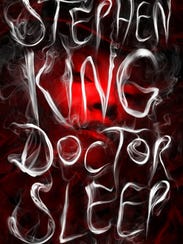
Doctor Sleep Journal #3: SHE SHINES


I'm sure there  are spoilers here.  If you are whiny about spoilers, you probably shouldn't read blogs about books you haven't read yet.  Because, it is totally fair for a community of readers to discuss portions of the book as they progress, not just give vague overviews. 
Some short  notes:

1. This is the second book this year in which King tells  the story from a primarily male  perspective.  Both Doctor Sleep and Joyland are about young men finding their way in this world.  Neither is particularly tied down as the novels begin, and each begins to make their own tangled webs of relationships as the novels progress.  Just because each is a young man does not mean their perspective is the same.  Devan Jones sees the world through pretty innocent eyes -- even though the story is being retold by and older Jones.  Dan's point of view is much darker; haunted.  I like them both, but personally identify more deeply with Jones than Torrance.

2. She Shines!  The reader knows as soon as Abra is introduced that she Shines.  Her father describes the families ability to work around her shining as the adjustments the family of a blind child  might make -- but in reverse.  I liked that analogy.

King reveals a connection that the reader picks up  on quicker that the characters in the story.  The good doctor has links to both Dan and Abra.  Might he be the connecting point? The chalkboard scene is reminiscent of scenes from Bag of Bones in which refrigerator magnets moved about.

So what's up with Abra?  As her doctor discusses possibilities of what might be going on with the strange kid, I sense King replaying characters he's introduced us to in the past.  She's not like Carrie, though she can move objects -- she's more powerful than Carrie!  And she's not like John Smith, who knows things -- she's more powerful than John.  So what's up with  her?  The reader knows she Shines.  But she is doing stuff Danny never did.  In fact, things would have unfolded much more decisively in Danny's favor if he shined the way Abra does.

Here is the song referenced concerning Abra as a baby:


3. Realistic family tones: The friction blended with camaraderie for the sake of a beloved child between mother-in-law and son-in-law is both sweet and all so real.  King makes these  scenes work like a master, grasping bits of insight that ring true to the reader.  There is something tender in this love/hate relationship.

4. Back to New England.  The scenes in New Hampshire remind me of the early tone King used in Needful Things.  Of course, both are pretty deep in New England -- but I could swear that for a moment I was back in the beloved Castle Rock.

5. Okay, I've gotta say. . . THE CLOWN CREEPS ME OUT!

They Shine Abra...
They Shine
and when  you're down here with me, YOU SHINE
The clown at the birthday party will give any Stephen King constant reader pause.  Just the presence of a clown in a King book gives the reader a heads up that something is going to happen. 
Clowns, in John’s opinion, were highly overrated. They scared the ---- out of kids under six. Kids over that age merely found them boring.
Well, the doctor proves wrong more than once, and I think his take on clowns is dead wrong.  Kids over six find them plenty scary!  I think we have an almost communal fear of clowns.  After all, if Pennywise didn't put the fear of clowns into you, then Steven Spielberg must have in Poltergeist.  If Spielberg and King didn't do it, how about Joker or John Wayne Gacy.

6. Return Visits To The Overlook.  Memories of the Overlook are intense.  King takes us back to the haunted hotel via Danny's memory -- and that is much more powerful than simply reading The Shining again.  Because when Danny goes back to the overlook in his memory, he is doing it personally, experiencing it again with renewed fear he can't stifle.

Was the hose a hose, or a snake?  In Dan's mind it was a snake, no doubt about it.  But he also knows he was really just a hose.  Dan does not try to rationalize his experience at the overlook, telling himself some garbage about it all having been in his head.  He knows full well the place was very haunted and that the ghosts in the hotel drove his daddy crazy.
Is it a snake or a hose? 
Who can say, my dear Redrum, Redrum my dear? Who can say?
It buzzes at him, and terror jumps up his throat from his rapidly beating heart. Rattlesnakes buzz like that.

7. Haha Mr. Kubrick, the joke is on you!


  Kubrick digs abound!  King rightly insists that the true history of The Overlook comes from his novel The Shining, not the Kubrick movie.  In the current issue of Cemetery Dance (#70), Bev Vincent calls the 1980 Kubrick adaptation "pollution."
Yes, it was room 217,  not room 237.  Dick Hallorann is alive.  And yes, the Overlook is gone,  burned to the  ground after the boiler exploded.  . . . Int he Stephen King universe, Jack Torrance never wrote "all work and no play makes Jack a dull  boy."  There were no creepy twins in the hotel corridors, nor did gouts  of blood erupt from elevators.  Danny's father  never  said, "Here's Jonny."
There are other subtle jabs at Kubrick.  In particular, King insists several times in Doctor Sleep that ghosts are evidence of life after death.  Of course, Kubrick didn't necessarily believe in life after death, and certainly not hell.  Don't tell Dan Torrance that, because he has seen beyond the grave.

Step Aside Kubrick -- Doctor Sleep Offers The True Torrance Family History


Is Doctor Sleep going to rock the house -- or might it somehow drain our love and admiration for the classic Stephen King work, The Shining?  I'm not sure sequels can' ruin predecessors, but it can color things for new generations who read the sequel first.  Mr. King should be very pleased, as early reviews for Doctor Sleep seem to be quite positive.

Bob Minzesheimer at USA Today headlines his review, "After 36 years, King gives 'Shining' a new luster in sequel."

With Doctor Sleep, Stephen King tells us he chose not to accept the Kubrick movie background but instead stay faithful to his own version of the Torrance family history.  Minzesheimer says King called Doctor Sleep "sharper" in its characterization and a little more positive.

Quoting Bev Vincent, The USA Today article notes:
Bev Vincent, author of The Stephen King Illustrated Companion, says it's risky for King to write a sequel to The Shining, "which is one of the books that will be read for generations. Can he recapture the magic?" 
Vincent's verdict: "King created a different kind of magic" in Doctor Sleep. It's "Danny's history from the perspective of a much more experienced and skilled writer."
Early reviews are good. The New York Times praises it as "a very quick and nimble story." Publishers Weekly calls it "a gripping, taut read."
Check out the article, it also has some short notes on King's current work, Mister Mercedes, which is about a deranged terrorist.  (Deranged is their word.  I can't think of non-deranged terrorist.)  A

WAIT A MINUTE -- Me Thinks King Is Toying With us!
In wrapping things up, Minzesheimer has a few words about Under The Done, noting King will write the first episode of season 2.  Then he tells us that King will not say if it will "diverge from the novel."  I think King was testing to see if Mr. Minzesheimer had even read the book, as Under The Dome is already so far from the novel it would require Big Jim to wake and realize everything since episode 3 was just a big dream.

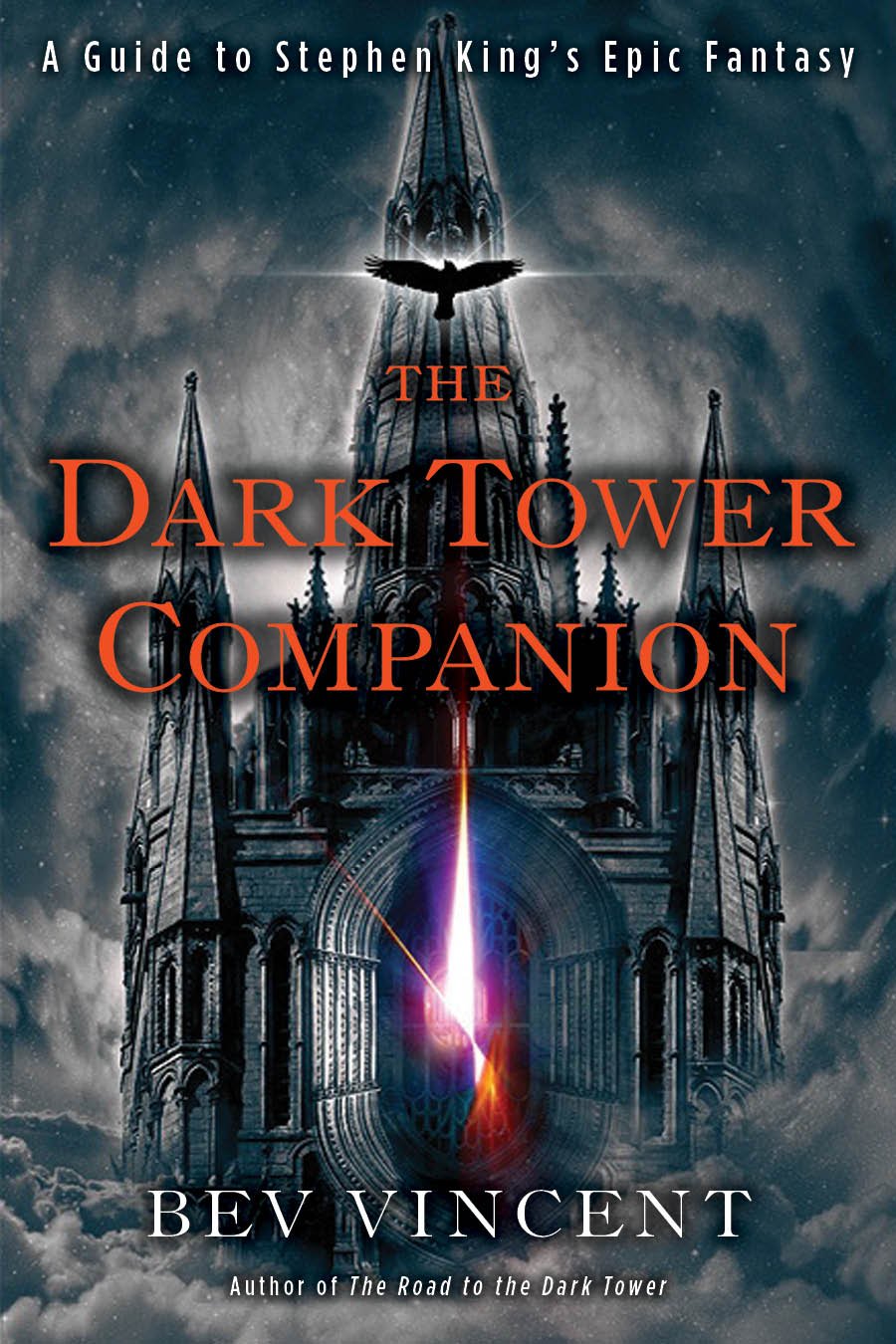
Cemetery Dance Signed Copies Of THE DARK TOWER COMPANION


Check  out my review of THE DARK TOWER COMPANION (HERE)

From Cemetery Dance:
Hi Folks! 
We're pleased to report that our signed Limited Edition hardcover of The Dark Tower Companion: A Guide to Stephen King's Epic Fantasy by Bev Vincent contains material not available in other versions of the book! 
AN ALL-NEW COMPREHENSIVE GUIDE TO ONE OF THE MOST BRILLIANTLY CONSTRUCTED WORLDS IN ALL OF FICTION! 
Stephen King's bestselling multi-volume Dark Tower series is the author's most inspired and imaginative creation. The story of Roland Deschain of Gilead, the last gunslinger, and his lifelong quest to reach the tower and save humanity across infinite parallel worlds is one that has consumed King throughout his career as characters and concepts crossed back and forth between the series and the rest of his fictional universe. The mythos continues to be chronicled and expanded in graphic novels overseen by King, interactive adventures on his website, a proposed film adaptation, and in a new Dark Tower novel. 
The Dark Tower Companion is the ultimate compendium to King's evolving magnum opus, presenting the mythology, history, and geography of this epic fantasy that has captivated generations of readers. 
Featuring interviews with Stephen King, Ron Howard, Dark Tower expert Robin Furth and others, Bev Vincent reveals The Dark Tower's influential literary origins, examines its connections to the vast majority of King's other novels, explores the expanded universe, catalogs the major characters, locations and concepts, and includes a travel guide to the story's real-world locations, giving fans who have followed Roland's journey—or those who are discovering it for the first time—a fascinating overview of the series and an inside look at the creative process of one of the world's most popular authors.

MY REVIEW: THE DARK TOWER COMPANION by Bev Vincent


I’ve been reading and loving Bev Vincent’s Dark Tower Companion.  I’ve got to admit, I did not read it in chronological order.  I had to scan through to make sure I’d read all the chapters!  The companion, as is true of any good companion – is easy to skip and dip through.  The chapters are short, precise and well written.


Here’s what I liked:

1. Multi-Purpose.  (That sounds boring -- like soap or something.  Sorry. )  The Dark Tower Companion is helpful for both research and for getting familiar with the Dark Tower series.  As a reference work, Vincent gives us names, dates places and people.  However, the book is much more than a simple dictionary of who’s-who in the Dark Tower universe.  Vincent draws the reader in, explaining the plot and flow of the books.

2. Accessible.  The book is not heavily footnoted, so it doesn't read like a research paper.  Vincent doesn’t spend a lot of time explaining where he gets his information – he just shares it.  This is actually quite charming! You don’t get the feeling that he is brailling his way about.  The lack of footnotes gives the book a smoother narration.  I didn't spend a lot of time with my finger in the back of the book trying to keep up with each footnote.  If it’s important – it’s in the text.  So just read!

3. Answers ahead!  Vincent seems aware of readers questions, concerns and points of confusion with the Dark Tower series.  Without a hint of smug arrogance, he goes about answering things that have left readers scratching their heads.  His grasp is scholarly – his tone is conversational; like having lunch with your friend the theologian.

After I read the Dark Tower series the first time, I both loved it and hated it.  But I was also unsure of exactly what all had just happened.  Bev Vincent seems to say, “Okay, let me help you with this because I know it’s really cool, but a little confusing.”  I found myself often saying out loud, “AH!  That’s it!” as answers to old questions came to light.

4. A Friend With Answers.  Bev Vincent is able to speak with authority on the subject without talking down to the readers.  In fact, he is so fluent in Mid-World, one gets the feeling he has gone through a doorway and visited.  Really, you have the sense that he’s been there.

5. MAP! The Dark Tower Companion is the only book I’m aware of to give us a map of mid-world.  No, I haven’t googled or hunted for one – but it’s the first attempt I’ve come across.  I found it quite helpful!  In fact, I learned quite a lot just reading the map.

WAIT!  I just found a comment by Bev Vincent at Burnette’s blog in which he confirms that he is the first one “to ever attempt to assemble all the bits and pieces and, given the inconsistencies in time and space and distance in Mid-World, it worked quite well.” (HERE)

6. Familiarity. Vincent is not only familiar with the main body of work (DT 1-7), but with the gargantuan piles of sub-stories that surround the Dark Tower.  He discusses tie-ins, comics and  secondary novels such as Wind Through The Keyhole and Little Sisters of Eluria.  He is also able to talk about Discordia, time lines and the geography of mid-world.

7. Opens New Doors. The Companion stirs my interest in areas of the Dark Tower I previously blew off.  For instance, he gives great weight to the Graphic Novels.  I had just kinda shrugged, thinking – Comic books?  (I didn’t grow up with cartoons or comics.  Not because my parents were against them. . . I was just too busy playing.)

About the Graphic novels, Vincent shares,
“King said that one reason he agreed to the plan was that he felt there probably would never be a Dark Tower movie and that this adaptation would be the next best thing.”  
When interviewing Furth, it is revealed that King did have oversight of the Graphic novel's direction and final say in what would go to print.  Or, in other words, even though others are moving the story along – it’s still King’s story!  He didn't pawn it off to the makers of The Children of the Corn 19.  He had a vested, personal interest in the story-line 

8. Tools.  Vincent gives tools that help put the story together.  He is well aware that everything doesn't fit, but still makes a great effort.  Vincent not only gives us maps, he offers timelines.  I found this quite insightful.  For instance, if it seems like time doesn’t always move the same in mid-world and it does in our world. . . that’s because it doesn’t!

There were several times reading this book that I wanted to slap my head, “I’m not crazy!”  Things that just didn't seem to line up – didn't because , well, they didn’t line up!  For instance, distance is always changing in mid-world.  “Mid-World is getting bigger,” Vincent explains.  Really?  “Gildead was once only a thousand miles from the Western Sea, but it took Roland many years to go from one to the other.”  Oh!

Here’s a great insight: “The chronology of events on Earth is convoluted because the ka-tet comes from different decades and jumps back and forth to different times.  Did you realize that Eddie is only a couple of years older than Jake?”  NO, I didn't realize that!

9.  The End.  I am very happy that Vincent takes time to give a short essay (chapter) on “The End And What It Might Mean.”  Because understanding the end of the dark tower is important to my desire to return to the journey.  Vincent argues that the Dark Tower is not a loop – because each time Roland returns to the journey he is a changed man.  Roland grows, develops – “improves” – and matures with each attempt.  Pointing out that Roland is still deeply flawed, Vincent surmises that the gunslinger may have to repeat the journey “dozens or hundreds of times more” until he gets it right.

And, after a very engaging discussion about the Dark Tower’s end, Vincent offered something I thought was really important – a quote from Stephen King.  King chides readers, saying “My ending is my ending.”  And then Mr. King points out that on this journey Roland could not possibly be rewarded with complete victory because of the very serious sin (my word) he committed.  “You cannot do things as serious a sacrifice a child and not have to pay” King says.  AH!  So the way King ends the Dark Tower is actually an ethical narrative.  I LOVE IT!  YES!  This is actually a theologically significant thought.

The discussions are deep, and I promise – I haven’t scratched the surface.

The Interviews:

The interviews in this book are great!  They include Brian Stark, Discordia.  Ron Howard and Akiva Goldsman, The Dark Tower Movie.  I found the Ron Howard interview to have a lot more information than I’d expected.  He’s much more excited about the project, and familiar with the source material, than I had at first thought.  He does reveal that the movies and TV series would not “necessarily” deal with the entire story “chronologically.”  That makes sense!

Vincent himself offers support for the idea of a non-chronological movie series, writing at Burnette’s blog, “The Gunslinger, except for a couple of bursts of activity, is a pretty sedate book. Not the way you'd want to launch a franchise or series of films. It has the same issues that make it a doorkeeper for readers of the series.” (thetruthinsidethelie.blogspot.com)

When asked if anyone ever tried to tie TV and movies together like Howard was The Dark Tower, he said that he didn’t think so.  Of course, Howard pointed out, that Star Wars has existed in all the mediums, as well as Star Trek.

Also interviewed are Robin Furth, David Peter, Jae Lee, Michael Lark, Richard Isanove, Stefano Gudiano, Laurence Campbell of The Graphic Novels.  And, there is a wonderful interview with Stephen King.

A friend once said to me, “Maybe someday you’ll land the BIG interview.”  I was confused – what’s the BIG interview?  Rick Warren? . . . “No, Stephen King, you moron!”  Oh!  Of course.  But, truth is, I have no interest in interviewing King.  Here’s why – people like Bev Vincent have already asked the best questions.  They've come up with stuff I would have never thought to ask!  I would just be sitting there going, “So, about The Shining. . . is it actually about a haunted hotel. . .” and “What are the chances of you writing a Dark Tower 8 that’s a choose your own adventure.”  And see, none of those questions are helpful!  Anyway, I enjoyed Mr. Vincent’s interview quite a bit.


Vincent asked King, “Do you have a sense of what’s going to happen with the movie adaptation?”  King’s answer, in part, was, “I think that people who read the books will be in equal parts delighted and infuriated by what they see, but I also think that they’ll keep coming back because, to me, they got a brilliant take on the whole thing.”  King suddenly clams up – should he be sharing this?  Then he says that the chracter of Jake Chambers is “very important.”

I really liked the discussion with King about when the author knew exactly how the Dark Tower would end.  King not only shares when he got a vision for the final scenes in the book, but the fact that he is aware that “a lot of people didn’t like the way the thing ended, but after all the things that I’d written about how ka is a wheel and it always comes back to where it started, I don’t see how anybody could have expected anything different, really.”  He compares it to Ghost Brothers of Darkland County. . . that until you get it right, you have to keep doing it.  I would compare it to Groundhog Day!

 By the way, King does discuss some other possibilities for how the series might have ended.

When asked if he always planned to include himself in the series, King discusses Dickens’ novel “The Mystery of Edwin Drood” – which was let unfinished upon Dickens death.  He then explains how he found himself serving the Beam.

As much as I wore my copy of the Road to the Dark Tower to shreds, this one is already more tattered!  Pages folded down, lines marked up – it has become my road map to the series.  Finally a lot of things make sense.

I LOVE IT!

My interest in this series has been stirred to life again twice.  First by a book called “The Stephen King Universe.”  It was the first time I became aware that all these books connected – and the axis was The Dark Tower.  The Dark Tower Companion has reinvigorated by love for this series.

The Dark Tower is both a challenge and a passion for me.  It’s like trying to love a very complex woman.  I’m not always sure what in the world she’s talking about – she’s much deeper than I am – but I am too attracted to walk away.  Bev Vincent is like a good friend, helping me understand the mystery woman and offering hints on how exactly to approach her.

LINKS:


Upcoming 2013


Well, it looks like a it's going to be a pretty good year to be a Stephen King fan.  The constant reader can look forward to two King novels -- Doctor Sleep and Joyland.  We can also expect several books about King, and we will find Mr. King all over the television.  Both Syfy and CBS will be running Stephen King television shows.

Here is a short list of some things we can expect in the upcoming year:

2013: Haven was renewed by Syfy for  another year.

2013: Stephen King Desk Calendar.

2013: Screamplays.
Cemetery Dance still lists this book coming out in 2013.  I ordered it in. . . 2011ish ?  I wonder if they remember!  I'm looking forward to it.
2013: The Illustrated Stephen King Movie Trivia Book.  (More HERE)
Cemetery Dance describes the book, saying, "1,000 questions to test your knowledge of the movies, miniseries, and television episodes based on ideas conjured from the imagination of the King of Horror, along with more than 50 special illustration-based questions from Cemetery Dance favorite artist Glenn Chadbourne."
January 23, 2013: Limited Edition of The Shining. Subterranean Press.  (More HERE)

March, 2013: Ghost Brothers Soundtrack CD/DVD Coming March 2013

April 2, 2013: The Dark Tower Companion, Bev Vincent.
I discussed this book with Bev Vincent in my recent interview.  In part, Vincent said:
This is the first book to address the Marvel adaptations and their place in the canon (or not). I look at each graphic novel series and underline the places where it provides new scenes or material, and the places where it diverges from or contradicts King’s novels. I also provide summaries of the extra material found in each issue for people who haven’t read the graphic novels. 
Check out the full interview at: talkstephenking.blogspot.com
Summer 2013: Under The Dome goes to CBS

June 4, 2013: Joyland
What's not to like?   Stephen King sets a killer loose in a theme park.  Nifty.
September 24, 2013: Doctor  Sleep
Here's a book I'm really looking forward to!  It's a sequel to The Shining!  King doesn't revisit his works ver often,and I think this is a great one to go back to.
October, 2013: CARRIE
I agree with the sentiments Rod Pocowatchit at The Wichita Eagle expresed: "I’m generally not a fan of remakes, but it’s rumored this new version is truer to King’s novel than Brian DePalma’s film that made Sissy Spacek a star. And the casting is inspired — Moretz is one of the best young actors today, and Julianne Moore should chew up the scenery nicely as Carrie’s crazy-pants mother." (HERE)

Read more here: http://www.kansas.com/2013/01/05/2626108/2013-movie-preview-on-the-horizon.html#storylink=cpy

Interview with BEV VINCENT part 2


This is part 2 of my interview with Bev Vincent, author of The Road To The Dark Tower.  

You can read part 1 of the interview at talkstephenking.blogspot.com.


Talk Stephen King: Twenty-First Century King is a collection of reviews about King’s work. Does 21st century mean that the reviews were written by you since the year 2000, or that the books reviewed were all written after 2000? Can you tell us more about this book?

Bev Vincent: The books reviewed were all published after 1999. Brian Freeman at Cemetery Dance asked if I would be interested in doing a chapbook that collects my reviews of King’s work. When I started to assemble the text, I tried to come up with a theme. Since 1999 was such an important year in King’s life, with the near-fatal accident, I decided to focus on things published after that, starting with “Riding the Bullet” and ending with The Wind Through the Keyhole. I ended up with 21 reviews, and the manuscript came in at 21,000 words, so it seemed like there was some sort of synchrony at work. The 50-page chapbook has a nice glossy cover and was beautifully designed by the folks at CD. It’s limited to 750 copies, and every one is signed by me.

Talk Stephen King: You discussed recently in a blog post what you called "Narrative lapses and shortcuts." When an author messes up their story with inconsistencies. Do you spot many of these when reading King? 

Bev Vincent: The Dark Tower series is almost a study in narrative lapses! There are so many continuity errors in the early books (which were never copy edited prior to publication) that King decided to use some of them as an important component of the story. Others he simply ignored, such as character names that change from one page to the next or from one book to the next.

In that essay, I discussed characters who do things without sufficient motivation, or storytellers who drop important threads. I don’t observe things like that too often in King’s works, in part because he has fearsome editors who put his work under close scrutiny and catch any of these potential lapses or errors. People might complain about the odd typo or factual error that gets past everyone (the misspelling of Killeen throughout 11/22/63, for example, or gaffes involving the details of guns that King often makes), but in terms of dropping the ball narratively, I don’t see that in his work. He’s such a natural and intuitive storyteller that seems to know how to handle all the threads of the tale and when it’s time to come back to something.

My biggest complaint about something he does every now and then is that he has a narrator hide something from the reader. I remember this specifically in From a Buick 8 but it has happened elsewhere. A first person narrator details his movements step by step until he puts something in his pocket. The narrator doesn’t say what that is, because King wants it to be a surprise when it comes into play later, but in my opinion that’s cheating. Not playing fair.

Talk Stephen King: Are you a Dark Tower purist? Does it bother you when King revises the Dark Tower stories? Were changes made to the entire series, or only to the first novel?

Bev Vincent: I’m not a purist. I don’t mind when changes are made to books when they’re adapted to film, for example, though I know that it disturbs a lot of people, especially when the changes seem arbitrary. I don’t always agree with the changes King makes. I think it was a mistake to move The Stand forward a decade when he issued the restored edition in 1990. I know that he wanted to include echoes from the AIDS crisis, but he created so many anachronisms that it didn’t seem like a wise decision. A babysitter who was paid a dollar for an evening might have made sense in the 1970s, but it certainly didn’t fifteen years later.


To date, The Gunslinger is the only book in the series that he has revised. Every now and then he says he wants to go back over the whole thing and smooth it out, but I doubt he’ll do that. In fact, I asked him about that specifically during the interview for The Dark Tower Companion, but you’ll have to wait for the book to come out to hear what he said!

Talk Stephen King: We know that the Dark Tower reaches far beyond the pages of the eight books King has written that bear the title "A Dark Tower Novel." Does the Tower extend into the works of authors other than Stephen King? (For instance, Has Straub ever referenced it?)

Bev Vincent: Without King’s permission, other authors couldn’t do that. The characters are King’s intellectual property and he doesn’t often let other people play in his sandbox. It was Straub’s idea to incorporate Dark Tower elements into Black House, the sequel to The Talisman, which was written at a time when almost everything King worked on was steeped in Dark Tower mythos. So, in a way, Straub has “referenced” it. There is one element that goes in the other direction, though. Bango Skank, the never-seen graffiti artist from the Dark Tower series first appeared in a Straub story, “The Buffalo Hunter.” He and King talked about using the character in The Talisman, but they never did. With Straub’s permission, Bango Skank became a semi-regular apparition in the Dark Tower series.

Talk Stephen King: You interviewed Stephen King for The Dark Tower Companion. What was that like?
Bev Vincent: I’ve known King since about 1997, though the first time I met him was at a signing in Houston in 1988. We’ve corresponded off and on over the years, and I’ve met him on a number of occasions, most recently at the world premiere of Ghost Brothers of Darkland County. We watch some of the same TV series (Sons of Anarchy and Dexter, for example) and read a number of the same authors, so we sometimes discuss these things. But I’ve never interviewed him before. I asked him the occasional question by e-mail while working on The Road to the Dark Tower, but never a formal live interview. It all went very well, though. I got some great quotes, and he knows how to manage the allotted time to best effect.

Talk Stephen King: Does the book come with his blessing, or is this "unauthorized"?

Bev Vincent: I would call all three books authorized in that I have always sought King’s “blessing” to do them and he has participated to some extent in all of them. For The Road to the Dark Tower, he provided the manuscripts of the final three books two years before they were published so my book could come out soon after The Dark Tower. Then he provided a generous quote for the cover. Then he allowed us to reproduce all that rare material for The Stephen King Illustrated Companion. For the new book, he provided an early manuscript of The Wind Through the Keyhole and again supplied a cover quote.

Talk Stephen King: The Dark Tower movie is on – then off – then on. (I honestly can’t remember at the moment where it is!) How well do you think The Dark Tower will translate to film?

Bev Vincent: It’s on hold, pending funding. Akiva Goldsman wrote a script that was with Universal for a long time. When they declined, he wrote a new version for Warner Bros. Ultimately they passed, too. The next day another company declared their interest in backing the project, but I’ve heard nothing concrete since then.

It’s a difficult project. For one thing, it isn’t ingrained in culture the way The Lord of the Rings and The Hobbit are. It’s difficult to summarize in a way that describes exactly what it’s all about. I spoke with Ron Howard about his ideas, and was fascinated by the concept they had come up with. It wasn’t one that was going to make everyone happy but, as I said before, I’m not a purist, so I was eager to see it. Then I talked with Akiva Goldsman at greater length for The Dark Tower Companion. He was the person who brought the series to Howard and convinced him it would make a fantastic series. I still hope they will get to do it. It’s an innovative approach in that it combines both the big scope of the cinema and the narrow, personal focus of television.


This final question and answer concerns the last Dark Tower novel and the conclusion to the series.  If you haven't read it. . . you've been warned.

Talk Stephen King: I have a nerd question that I have to ask about the Dark Tower. You are welcome to banish me to the wastelands for asking. I know you are not the author, but maybe you can explain: Throughout the series we are given the impression that the universe is breaking down, and at a greater speed until Roland reaches the Dark Tower. There is a sense of impending doom unless he gets there quick enough. However, when he gets there. . . he just resets into the desert. Wouldn’t his failure to complete the mission cause something really bad to happen? Have I misunderstood something essential in the Dark Tower?

Bev Vincent: I talk about this at some length in The Dark Tower Companion in a chapter called “The End and What It Might Mean.” That title indicates that it’s definitely open to interpretation. Here are my thoughts in a nutshell: Roland does not have to reach the Dark Tower—he has to save it from destruction. He wants to reach the Dark Tower for personal reasons that are tainted by hubris. He wants to face whoever abides at the top of the Tower for a reckoning and, perhaps, so he can get this entity to take back all the bad things Roland had to do to get there. Roland’s ka-given task is essentially complete when he frees the Breakers from Algul Siento. The stress on the Beams is removed and they will begin to heal. Some of the broken ones may even regenerate.

The Crimson King is trapped outside the Tower, though, and he has proven his ability to wreak havoc even from that perch, so it is perfectly understandable that Roland feels the need to dispatch or banish him, too. So, maybe he does have to go to the Tower after all. Once he eliminates the Crimson King, though, my feeling is that he should say his prayers and utter the names of all those he sacrificed along the way, and the turn on his heel and go away. I think of him returning to Calla Bryn Sturgis to spend the rest of his natural days with Rosalita. Maybe he’d be the town sheriff or maybe he’d grow beans. His fatal flaw is that he always enters the Tower. He allows pride to rule him, and he is punished for this. Doomed to repeat and repeat and repeat until he “gets it right.”

For an alternate take on this element of King’s philosophy (something that shows up in other works, such as Kingdom Hospital), listen to his reading of the short story “Afterlife” from his December 2012 appearance at UMass Lowell.

THANK YOU BEV VINCENT!
Check out Bev Vincnt's website at www.bevvincent.com

Interview With Bev Vincent part 1


Do you read Cemetery Dance?  I do!  And the first place I turn is to Bev Vincnt's column.  Even when there's a Stephen King story.  I was absolutely thrilled when Mr. Vincen allowed me the opportunity to ask him a series of interview questions.  This was really a gift of time on his part and I am supremely thankful.

On a personal note, this was exciting for me for two reasons.  First, Mr. Vincent is one of my favorite authors about Stephen King.  I've been using his book The Road to the Dark Tower as I read through the series again and have found it very helpful.  His book The Stephen King Companion is all out fun!

Second, this gave me an opportunity to ask some questions about the Dark Tower and the Stephen King Universe that I've thinking about ever since I read The Dark Tower 7.

Bev Vincent's The Stephen King Illustrated Companion was nominated for a 2010 Edgar® Award as well as  the 2009 Bram Stoker Award.

THE INTERVIEW


Talk Stephen King: Tell me a little about yourself. Do you focus primarily on King, or do you also write fiction? 

Bev Vincent: I’m originally from eastern Canada, though I’ve been living in Texas since 1989. In 2012, I became a dual citizen.

I write just about everything: non-fiction, book reviews, essays, blogs, short stories and novels. After a long hiatus from writing, I started working on short stories in 1999 and had my first one published the following year. In 2001, Rich Chizmar at Cemetery Dance asked me if I would consider writing the Stephen King news column that appears in each issue of the magazine, and I’ve been doing that ever since. I’ve written three books to date and edited one (The Stephen King Illustrated Trivia Book). I’ve published over 70 short stories, hundreds of book reviews and dozens of essays.

Talk Stephen King: You have a doctorate in chemistry – which suggests you do a lot more than just write books about Stephen King! What else do you do?

Bev Vincent: I have a Ph. D. in chemistry from Dalhousie University in Halifax, Nova Scotia, Canada. My specialty is a type of analysis known as X-ray diffraction—specifically, X-ray crystallography. We shoot X-ray beams at crystals and analyze the scattering pattern to determine the molecular structure of the compound and how the molecules pack together to make the crystal. This type of analysis has many uses, and may practitioners have won Nobel Prizes for determining the structures of biologically interesting molecules using the method. The company I work for manufactures and sells the equipment and software used for a wide range of X-ray analysis techniques. That’s my so-called day job. I’ve worked for the same company for 23 years.


Talk Stephen King: I’ve been reading The Road to the Dark Tower as I read through the Dark Tower novels. I saw you have a new companion book to the Dark Tower coming out (The Dark Tower Companion). How is it different from The Road to the Dark Tower?

Bev Vincent: When King published an eighth Dark Tower novel, The Wind Through the Keyhole, people asked me if I was going to update The Road to the Dark Tower to incorporate the new volume. I thought that sounded like a good idea, but my agent suggested that a completely new book would be even better. The Road to the Dark Tower is intended for people who have read (or are reading) the series. It looks at the series as a whole and explores it in detail. I liken my role to that of a tour guide escorting someone through the series, pointing out all the links, details, connections and references that a casual reader might otherwise have missed, especially on a first reading. The spoilers come early—only Chapter 1 is spoiler free. That was the only way I could see to do it at the time. You can’t talk about what happens at the Way Station after Jake and Roland leave, for example, without referring forward to Wolves of the Calla.


The impetus for The Dark Tower Companion was the news of a possible film adaptation of the series, together with the Marvel graphic novel adaptations. It seemed to me that there might be people who came to the series from sources outside the series books themselves. People who’ve read Insomnia or Hearts in Atlantis, too, who might be curious about who the Crimson King is, or what Breakers are. The new book is less analytical in some ways, although there are several chapters at the end where I wax philosophical about what it all means.

However, it starts off generally. What is Mid-World? What is the Dark Tower? Who is Roland? What is the nature of his quest? Questions of that sort. The chapters on the individual books are more self-contained, without much by way of forward-reaching spoilers.

The book has a comprehensive glossary of people, places and things, separated by those that are part of “our world” and those from Mid-World. It isn’t a Concordance (like Robin Furth’s). It doesn’t tell you on what pages you can find every mention of a character, although it does list the books in which a character (or place or thing) appears. The glossary tells you everything you might want to know about these entries, though.

This is the first book to address the Marvel adaptations and their place in the canon (or not). I look at each graphic novel series and underline the places where it provides new scenes or material, and the places where it diverges from or contradicts King’s novels. I also provide summaries of the extra material found in each issue for people who haven’t read the graphic novels.

I interviewed a lot of people for the book. Stephen King told me a few things about the series that he’s never said before. Ron Howard and Akiva Goldsman explained in detail how they plan to adapt the books to film and television if they can find a partner willing to fund the project. Brian Stark discusses the Discordia interactive game on King’s website. I also interviewed Robin Furth about the Marvel adaptation, as well as most of the major artistic contributors: illustrator Jae Lee, colorist Richard Isanove, scripter Peter David and several artists who stepped in after Jae Lee left the project.

There’s a chapter on the history of Mid-World and another on its geography. I tried my hand at creating a map of the parts of Mid-World that we know from the books, and I was surprised at how neatly it came together. Information from The Wind Through the Keyhole helped place a lot of it in context (the relative location of Gilead, for example) and, despite some contradictions within the text and the variable nature of direction and distance in Mid-World, it all came together nicely. I’m nobody’s cartographer, but I think people will be interested by the map. I also created a Dark Tower tour guide to Manhattan, which points out as many of the places in the city that are mentioned in the series as I could, along with a second map.

The book is 50% longer than The Road to the Dark Tower and, unlike the first book, is completely footnote-free! And it’s all new text.

Talk Stephen King: My favorite Stephen King companion book is The Stephen King Illustrated Companion. Not only is the text great, but it is full of reproductions of first drafts and early copies of the manuscripts. How did that book come together?

Bev Vincent: That was a fascinating and fun project that came to me out of the blue.  The book chain Barnes & Noble had published reader’s companions to Poe and Jane Austen and decided they wanted to do one on King. They reached out to the same book packager who had done the previous books, a company called becker&mayer! that specializes in design-heavy books. Their editor contacted me on the strength of The Road to the Dark Tower and asked if I would be interested in writing the book’s text.

The challenge was to write something meaningful that combined the concepts of biography and light literary analysis. Given the limited page count, I clearly couldn’t cover King’s entire bibliography (nor would I have wanted to—that would be a person’s life work!). I worked from a few governing principles: I wanted to focus on books that almost everyone has heard of, even if they aren’t King fans. I needed to pick books that spanned his writing career to that point (otherwise I could have gotten bogged down with the famous books from the 1970s and never made it to the 2000s). And I wanted books that either had a significant autobiographical or semi-autobiographical aspect to them, or ones that were written when there was something interesting going on in King’s life.

Once I chose the books and had my outline approved by the editor and Barnes & Noble, it was simply a matter of writing the text, which took about six weeks. I finished ahead of schedule, which meant that the documents specialist had the full text to work from when selecting the photographs and other accompanying materials that are a hallmark of their reader’s companions. These books aren’t simply read—they’re experienced. You can spend hours with one and never read a word of the text! We obtained King’s permission to search his archives at the University of Maine and reproduce anything we wanted. King had veto power, but he never employed it. He also provided access to a personal photo album. The book became a real treasure trove of never-before-seen material. The fact that it was so handsomely produced and inexpensive means that it was available to anyone who wanted it. It sold so well, there was a second printing within about a year. Sadly, it’s now out of print, but I have hopes that B&N will bring it back out again in the future.

One interesting spin-off from the book is that I was interviewed extensively for an updated version of the King profile for the Biography Channel. The person who interviewed me for it drew a lot of material from the book. Her copy was full of post-it notes and book marks. This version is only available internationally—it never airs in the US.

Talk Stephen King: Do you have some favorite non-King writers?
Bev Vincent: Indeed I have many. So many that my mind freezes whenever I’m asked the question. I read a lot of crime fiction by authors like Ian Rankin, Jonathan Kellerman, Lawrence Block, Michael Connelly, Kate Atkinson, George Pelecanos and Dennis Lehane. I read Alexander McCall Smith’s novels to my wife, along with the humorous essays of fellow Canadian Stuart McLean. I don’t read a lot of horror and very little science fiction and fantasy these days, though I once did.

I’ll read anything Peter Straub, Dan Simmons, Ian McEwen and Graham Joyce publish. I’ve lately become fond of foreign crime writers like Jo Nesbo, Steig Larsson, Natsuo Kirino and Keigo Higashino. I’m currently reading NOS4A2 by Joe Hill, and I really liked Owen King’s debut novel, Double Feature, which will be out in April. I’ve been enjoying Justin Cronin’s trilogy, am a fan of Stephen R. Donaldson’s fantasy series, and am challenged by the novels of Umberto Eco. To get an idea of what I’ve read over the past several years, check out my review page: www.onyxreviews.com

Talk Stephen King: Do you have a favorite Dark Tower book? 
Bev Vincent: I have a hard time making top ten lists or picking favorites. My mind doesn’t work that way. However, that said, I would have to choose The Gunslinger as my favorite.

Talk Stephen King: Why?
Bev Vincent: I know that wouldn’t be the obvious choice—a lot of people haven’t gotten into the Dark Tower series because that can be a difficult book—but I love it for the overall mood it casts. I first read it in 1984 and for a number of years it was the only Dark Tower book. I’ve read it many times over the years. It’s compact and dense, the protagonist isn’t terribly likable, but it has this haunting aura that charmed me.


Talk Stephen King: A favorite non-Tower King book? 
Bev Vincent: When I’m asked this question, I almost always think of Bag of Bones, his first book with Scribner, and its bookend partner, Lisey’s Story. I consider them a matching set. The writer without his wife; the wife without the writer. There’s a lot going on in Bag of Bones that makes it feel like a highly personal novel. I was also impressed by the writing process—how King wove in a crucial subplot that wasn’t present in the first draft. It becomes one of the most important facets of the story, but King put it in like an artist painting highlights on a nearly finished works. Little daubs of paint here and there. It was a lesson in the craft of writing.

Talk Stephen King: Is there any Stephen King book you just don’t like or couldn’t make it through? 
Bev Vincent: None that I couldn’t make it through, but a few that I dislike. I enjoyed the opening section of The Tommyknockers. I liked Bobbi and Gard a lot and was frustrated when King abandoned them for hundreds of pages to tell us about all these other people about whom I cared not a whit. I kept wanting to get back to Bobbi and Gard, which made it feel like I was just flipping pages. King thinks people missed the point on Needful Things, but my problem with the book is that it was missing the key element present in the rest of his work: likable characters. I hardly liked anyone in that book. And the wonky pseudoscience in Cell wrecked the book for me. It’s fine to have wibbly wobbly bits in a book so long as the story doesn’t rely on them. The whole “save to disk and reboot” concept didn’t hold water, so I couldn’t enjoy the book.

. . . . . . . . . . . . . . . . . . . . . . . . . . . . . . . . . . . . . .
PART TWO WILL POST JANUARY 2, 2013
. . . . . . . . . . . . . . . . . . . . . . . . . . . . . . . . . . . . . .

Check out Bev Vincent's website at www.bevvincent.com

Liljas Library: A New Dark Tower Companion On The Way

EXCITING NEWS!  This is from my favorite Stephen King website, Lilja's Library -- which is always fantastic!

The Dark Tower Companion announced


Bev Vincent has announced his new book: The Dark Tower Companion. Here is what he writes:
I’ve been a little coy about what I’m working on, but it’s time to announce my third book. The Dark Tower Companion will be published by New American Library (Penguin) in April. This massive companion is 50% longer than The Road to the Dark Tower. It covers not only the eight books of King’s series, but also the Marvel graphic novel adaptations. I interviewed King for the book, along with Robin Furth, Richard Isanove (colorist), Peter David (script), Jae Lee (artist) and most of the subsequent artists. 
I also, much to my great delight, got to talk with Ron Howard and Akiva Goldsman about how they plan to adapt the series. Click on the image to see a full-sized version of the great cover by Spanish artist Nekro.
Read more here.

The Gunslinger Journal #4


I have finished my first small leg of the Dark Tower journey; completing book 1, The Gunslinger.  It is a difficult journey for me.  First, it is quite different than I remember it.  Is that because I first read it via Stephen King’s audio version?  This time I read the revises with George Guidall.

Not Love At First Sight:


I still find the story hard to follow, confusing and at times down right frustrating.  It is not love at first sight.  I think I will buy the old tapes of King reading the story.  It would seem that with the major clean up King did to this story, it would be smoother.  But still, it is such a strange novel.  The action is slow, the characters are mostly unlikeable (I’m sorry) and the ideas seem incomplete.

Bev Vincent said the novel had a “dry, dark tone” that turned many away.  He also notes, “King’s revisions createa more internally consistent series of books for newcomers to the series.”

But just because it is not love at first sight does not mean I do not like the novel.  I do.  First, I know the series gets better!  Second, there is a flavor to both the book and the character Roland that is kind of fun.  He may not be immedately likeable – in the sense that I identify deeply with him – but he does possess traits that are fun.  Roland is stoic, strong, determined and pretty mean.  If he needs to take down the entire town of Tull to accomplish his mission, down they will go!   But he is charming, in a Clint Eastwood sort of way.  You don’t want to be on Roland’s bad side – or, get in his path to the tower.  Roland is a man driven by a single passion, to reach the Dark Tower.

There is another reason I find this book difficult – it requires scholarship.  This is not a novel to be read and enjoyed and tossed aside.  It has to be thought about, mulled over, studied.  For me that sometimes feels like work!  I spend my day as a preacher studying implications and meanings of Scripture.  Stephen King is not Scripture – he’s literature – but in this instance, literature meant to be taken at a deeper level.  A surface reading will miss a lot of what King is setting up.  So, my laziness in just wanting to read a good novel makes me a little shy when approaching this book.

Spiritual Symbolism:


Sin and Redemption: Here’s what I realized reading this time, Roland is a hero in search of redemption.  Not a new theme at all, but something I had somehow missed.  We’re not really supposed to identify or like Roland when we first meet him.  He is a man on a noble mission, but he is personally broken.

As the first segment in a redemption story, The Gunslinger goes to some pains to reveal Roland’s imperfections.  I’m working to avoid the word “sinner” – but there it is!  Roland is the sinner.  The Tower story runs like a long version of Pilgrims Progress.  He is a man bearing a great burden (very great burden!).

I’m not sure this analogy should be pressed hard, since I don’t think it was not in King’s minds eye when he wrote the book.  Is it fair to apply imagery beyond the authors intent?  I’m not sure.  But I can’t unsee some of this.

Themes from Christianity in particular play throughout the first novel, and become stronger toward the end.  It starts with evil being chased through the desert – the bad guy wears black!  Who is this man in black?  Flagg?  A servant of Flagg?  Walter O’Dim is. . . ?  Actually, it’s unclear in this novel.  

LEGION:
The man in black claims to serve a leader named “Legion.”  Not a reference to ancient Rome, but to the Biblical demoniac Jesus encountered.  Christ was confronted by the demon posessed man and demanded his name.  “Legon, because we are many.”  The demons begged Christ not to bring them into judgment before the appointed time (Judgment day).  Jesus honors the demons request, exorcizing the man – but instead of setting the demons lose on the earth, he sends them into a herd of nearby pigs.

JUDAS?: At first the sacrifice of Jake seems to be something like Abraham’s preparation to sacrifice his son Isaac.  Both know it will happen, yet like Abraham and Isaac they journey on. But Jake is not an Isaac at all.  He is not a willing sacrifice for Roland's tower!  Anything but.

Roland assures Jake of his protection, but later fails to save him.  Roland falls into the realm of betrayer in this novel.  Is he like a Judas then?  Not really.  Because what happens is unplanned.  Roland is aware things might go that way, but works to avoid a situation where he might have to sacrifice the boy.  When he is confronted with the options – boy or tower – he isn’t given time to think this through.  He acts on instinct, not deliberation.  This act will be something he is given opportunity to redeem later in the series.

GOLGOTHA: The man in black brings Roland to a place of bones – Golgotha.  This is the name of the place where Christ was crucified.  It is here that the man in black hopes to convince Roland to turn away from the dark tower.

The Gunslinger and the man in black have a final conversation that rambles into total confusion – Our universe could be nothing but a blade of grass, cut away and now dying.  What would you find if you came to the end of the universe, drilled a hole in the wall of the universe. . . what is on the other side?  This kind of talk goes on and on – stuff you expect to hear being tossed about in a dorm room full of seminary students.

Creation:
When Roland falls into a trance, the Biblical metaphors return.  He sees the man in black as the creator, and experiences creation as the man in black calls forth light and planets.

“The universe was void.  Nothing moved.   Nothing was.”
Compare to Genesis 1:2, “Now the earth was formless and empty, darkness was over the surface of the deep” only, instead of the Spirit of God hovering, Roland and the man in black are hovering.  It is not God who will call forth creation, but the man in black.

“Let us have light,” the voice of the man in black said nonchalantly, and there was light.   The gunslinger thought in a detached way that the light was good. (p.283, unrevised)
“God said, "Let there be light," and there was light. 4 God saw that the light was good,” Gen. 1:3-4

So what is the vision?   It is meant to scare Roland off his quest.   (I’m not sure why the man in black doesn’t just kill Roland – but I’m sure that’s just a very primitive thought, right?)  The man in black wants Roland to be aware that there are things taking place beyond his understanding – things he cannot grasp.  Roland is unworthy to carry out the mission of the dark tower.

When Roland invokes the Name – seemingly as a curse – the man in black pulls away.
“Jesus no more no more no more–”
“The voice of the man in black whispered silkily in his ear: “Then renege.  Cast away all thoughts of the Tower.  Go your way, gunslinger, and save your soul.”

Bev Vincent argues, “At one point, the narration seems to expand beyond Wlater to some greater being, never identified, perhaps the Voice of the Turtle.  Later, in the presence of Black Thirteen, Roland will understand that he was sent todash by the residual effects of that Wizard’s orb, which was recently in Walter’s hands.” (The Road To The Dark Tower, p.44)

BEAST:
The man in black speaks of a “Beast” who guards the dark tower.  The idea of a “beast” who stands guarding a mighty tower (like tower of Babel) which connects all civilization is a Biblical one.  Does King intend this?  I think he does.  Revelation centers on an end time war between the Beast and the Lamb.

The Beast is the Crimson King.  This was a change King made when he revised.  (See the portion below on “intentional” as to why he might use “beast” for the first draft.)

Flagg:
Is Walter O’Dim really Randall Flagg?  Yes.  But there are problems with this!  In the original version, it seems pretty clear that after the long conversation and the passage of ten years, the man in black is nothing but a pile of bones.

“The remains of the wood he had carried had turned to ironwood, and the man in black was a laughing skeleton in a rotting black robe, more bones in this place of bones, one more skull in golgotha.”

The question in the first edition of the novel would have been: How did the man in black die?  Roland shot at him several times, but he seemed to be unharmed.  Unless he died, and it was Walter’s ghost.  King revises this to make it clear that this is nothing but a trick by the man in black.

INTENTIONAL?

So, does King intend to make all these Biblical references?  I think so.

Though the gunslinger bears the marks of a young writer – it also shows the workings of a young man who still possesses a working knowledge of Scripture.  Or, to put it this way: The Stephen King who wrote the Gunslinger had been to church and listened to sermons more recently than the Stephen King who finished the Gunslinger.  The Gunslinger sports the knowledge of a person who has been churched.

Take for instance the title “Beast” which is later changed to Crimson King.  The younger King is more familiar with the idea of a great Beast, because it is a symbol from Christianity.  Later he uses Crimson King, as this more directly ties things to the great evil in his novels.

I think (think) he is throwing everything he has at the reader, hoping some of the symbolism will stick.  And some of it does.  Why the strange creation sequence?  I’m not completely sure.   Does Roland carrying wood to the place of bones supposed to be symbolic? – like Isaac carrying wood, or Christ carrying a cross?  Probably not.  But maybe!

Fantasy mirrors the Biblical genre of Apocalyptic.  Used in Daniel, Isaiah, Ezekiel and Revelation, it is quite different from the novel form of the genre such as “the Stand” or “The Road.”  Biblical Apocalyptic uses symbolism to paint pictures of the future.  It draws on previously used symbols, sometimes reinterpreting them, to tell the story of redemption.  In many ways, the gunslinger falls into this genre.  It is not just an end of the world book – but a highly symbolic book.  The problem with such a thing is the same one that Bible students encounter; knowing which elements the writer intended as symbol and which he intends to be read at a simple surface level reading.

What Is The Tower?


When Roland catches the man in black he shoots at him.  The man in black suggests that it is not a good idea to kill the person who has the answers he seeks.  They go to a campfire, where the man in black cooks a rabbit – Roland eats jerky.

If the end is supposed to provide answers, it does not.  What is the dark tower?  The axis of many universes – endless worlds.  The tower is the “nexus of time.”  It’s a good answer to stave off the reader.  Truth is, the reader (me) is a little suspect that at this point Stephen King has no idea what the dark tower is!  Saying is the “nexus of time” or “the nexus of size” make it worth pursuing without a lot further explanation of exactly what in the world is going on.

Here’s the thing: The Dark Tower itself, at least in this novel, is nothing more than what Alfred  Hitchcock would call a “McGuffin.”  A McGuffin is a devise that simply moves the plot forward, it doesn’t matter what it is.  If it’s a spy story, the McGuffin is the needed papers.  In this case, it is the mysterious tower.

I think The Dark Tower itself is a mystery to both writer and reader in this first installment of The Dark Tower.  The writer is driven by the concept, not fully aware of what it is or why Roland must reach it.

The Gunslinger Journal #1


The journal entries are not intended to be reviews of the books.  They are simply my notes and observations as I journey through various King novels.  I will leave the work of review to the outstanding Lilja at Lilja’s Library.

I have started a familiar journey toward the Dark Tower, traveling once again with the Gunslinger as he chases the man in black.

Here are some initial impressions:

1. I like the style better than I remember.  It does read like someone who really wants to be very serious!  This is before King really had the freedom in his writing to play games and crack lots of jokes at himself.  The light heartedness we sometimes encounter in the narration of other books is not yet present.

But I like the heavy serious tone that novel strikes.  It does feel like someone who has lots to say. . . but isn’t sure just yet what it is they have!  That’s okay, I’m game, Mr. King!  If you want to be serious, I’ll be serious and play along.  It is the joy of reading a young mans work.

2. In the Dark Tower, King is “world building.”  But he keeps the reader in suspense in this novel – what world are we on?  Where are we?  Is this the afterlife?  The man in black mentions the world next door – I like that phrase.  The world of the dark tower is one that parallels our own, yet has some drastic differences.  It is a world that has moved on – a world in flux, or change.  Though there are familiar things – birds and farmers and guns – there are also some missing items.  Government?   It appears each town is run on its own.  It is a lawless world where dark men can come to town and raise the dead.  I imagine the book of Judges in the Bible.

3. Nineteen.  The key word the dark man gives to drawing out information from the man he raised (Norton) from the dead is “nineteen.”  A theme that King will play with throughout the series, and his own writing.

4. The book is difficult to follow.  It starts with the gunslinger meeting a farmer.  The farmer wants to know about Tull.  This leads to a flashback.   But there are scene shifts within the flashback – points of view given that are not directly the gunslingers.  This gets a little complicated, I think.  I'll discuss that  further below.

5. Spiritual Overtones: By the way, the idea of a fallen world that needs to be restored has huge spiritual overtones.  A good gunslinger, who does not conform to “religion” as it is known rides out to confront and defeat a dark man.  Of course, creation itself  is at stake and must be rescued.  Sounds familiar to me.

6. The dark resurrection reminds me of Pet Sematary.

Mr. Vincent and Me:


Wow, am I glad I have Bev Vincent’s “The Road To The Dark Tower.”  Vincent explains everything from a birds eye point of view, taking into account the entire series, changes King made to the Gunslinger and even discussing issues of chronology.

I have to admit, I was lost as the Dark Man raised Norton from the dead – simply in terms of where we were in the timeline.  I knew at some point the Gunslinger started talking, but then the scene changed and it was another flashback.  So it was a flashback in a flashback.   But, to make things more complicated – I wasn’t even clear where the Gunslinger’s conversation with the farmer fit in to all of this.

So Vincent explains the whole chronology thing succinctly, without making me feel stupid (though you all are welcome to point fingers and declare me unworthy of the journey!)  Vincent writes:
“The Gunslinger,” covers a period of nearly two months, taking the as-yet-unnamed gunslinger from Prince town through Tull and southeast into the desert, where he encounters Brown. . . 
. . . King begins the story five days after Roland departs from Brown’s hut. . .
(AH!!!  How did I not put this together.  So even Brown is a flashback)
“Through a series of flashbacks, he reminisces about his recent history.”

See, now I get it!  In fact, now I’m excited about it.  What was that, four sentenses that made the whole first part of the novel flow.
“In Song of Susannah, King says he liked how the story seems to be going backward (I’LL SAY!), starting with Roland, slipping back to Brown, then to Tull and finally to show Nort the Weeedeater being resurrected by Walter.  “The early part of it was all told in reverse gear.”
(The quotes are from page 31 of the paperback.)

PURPOSE:

Finally, Vincent address the issue I’ve been harping on – one of PURPOSE.  Why must the gunslinger go to the tower?  “The gunslinger sues people and discards them after they’ve served thier purpose or if they stand in the way of his goal.  In the abstract, his actions are understandable.  Saving all of existence is surely worth sacrificing a few people.”

But, I must ask – when the gunslinger gets to the Dark Tower, does he make any real attempt to save all humanity?  Is that what happened?  And, is he not caught like Bill Murray in an eternal Ground Hog Day situation?  Be patient, the journey will answer these questions for me!  Will King ever give us a Dark Tower 8, where the Gunslinger finally reaches the Dark Tower and successfully restores things?

Isn't this basically what every Star Trek movie is about?

Misery Journal #5: Conclusion


What a ride!  Misery was a huge surprise to me.  I did not expect to like it.  How, I wondered, could King carry the story of a trapped writer for so many pages?  Of course, my opinion was based solely on the movie.  Having read the book, I now fully understand what Bev Vincent meant  when he wrote, "Misery will get under your skin."

Misery Origins:

In The Stephen King Illustrated Companion, Bev Vincent says that Misery was  inspired  in part by John Fowles's The Collector and the Evelyn Waugh short story "The Man Who  Loved  Dickens."  Vincent writes:
After reading the latter, King wondered what would happen if Dickens himself were held captive.  He reflected in an interview, "Halfway  through. . . I realized I was trying to express some of my own deepest fear-feelings: the sense of being trapped, the sense of having come from someplace like Africa and knowing I would never be  able  to get home, and trying to figure out what  it was I was doing, why I was  doing it, and why people were  responding to it."  (p.96) 
Vincent further explains that the novel was the result of a dream King had while flying to England.  "He dreamed about a woman who held a writer prisoner and killed him, skinned him, fed  the remains to her pig, and bound his novel  in human skin."

The Stephen King Universe notes that due to its realistic themes and dark ending, King originally intended Misery to be published  as a Richard Bachman novel.

Number One Fan:

Autograph hunter Mark Chapman gets a signature from John Lennon
outside his elegant Dakota apartment building in New York
where hours later he gunned down the former Beatle
(photo credit HERE)
King fans can be obsessive.  One guy broke into King's house claiming to have a bomb.  He is mobbed for autographs, and sometimes the fans turn out to be flat out scary! The Stephen King Universe says, "Misery was clearly inspired by events in King's own life."  It relates this frightening account:
In 1980,  he reportedly signed one of his books for a stranger  who literally did call himself King's 'number one fan.'  That lost soul was Mark Chapman, who would later earn his palce in history by shooting and killing John Lennon shortly thereafter." (SK Universe, p.335)
The encounter with Mark Chapman is elaborated on for a full page in the original edition of The Stephen King Companion (p.248) which is quoting form King's September 22, 1986 Virginia Beach lecture.

The book is dedicated to "Stephanie and Jim Leonard, who know why.  Boy, do they."  George Beahm offers this insight in the original Stephen King Companion, "Stephanie Leonard, for many years King's secretary and the editor/publisher of Castle Rock, knows firsthand what it's like to deal  with the fans -- the good, the bad and the ugly."

Here are my final notes for the present Misery Journal:

1. Suspense: As Paul finishes the novel, King builds intensity.  What is going to happen when he finishes writing?  The pages left to write become something like a clock running down, like in Running Man.

The novel employs Hitchcock levels of suspense at the end as the reader (and Paul) wnder if Annie is really dead.  She is discovered, not laying dead with wads of paper coming from her mouth -- but outside Misery's pig stall, with one hand wrapped around the handle of a chainsaw.  

2. There are rats here!  King has a way of sending rats racing through a story at moments I do not expect them.  Who would have expected to find rats in Misery?  I didn't!  But rats there are!  They are down in Annie's cellar.  Of course, Paul can't move, so the horror builds all the more as he  contends with rats staring at him.

3. ESCAPE: As with any novel where an escape is required, the reader is left thinking how they might execute an escape in a similar situation.  What the reader is likely to forget is just how weak and dependent on Annie Paul really is.

4. King takes us inside the writers mind as he works through problems.  Misery is really about the art of writing.

The Stephen King Companion, by George Beahm, notes that the August 1987 edition of The Castle Rock included an article by Tabitha King in which she reminded readers that Stephen King was not Paul Sheldon.  More importantly, she made the point that Annie Wilkes is a "metaphor for the creative drive itself." Beahm writes (quoting Tabitha King):
Beyond merely a tale of torture and murder, "Misery is far more concerned with the way in which a creative person can be tortured by his own powers, addicted to the act  of creation, damaged by it.  At the end, Paul Sheldon has not freed himself from Annie Wilkes; she holds him captive still, emotionally and creatively." (The Stephen King Companion, Revised Edition, 269)

I like the insight that a novel never turns out quite the way an author first imagines it.

He felt as he always did when he finished a book— queerly empty, let down, aware that for each little success he had paid a toll of absurdity. -- Misery, p. 287
Not  only is it about writing, but it is about writing being an act of creation (as discussed above by Tabitha King),

Still, it was good to be done— always good to be done. Good to have produced, to have caused a thing to be. In a numb sort of way he understood and appreciated the bravery of the act, of making little lives that weren’t, creating the appearance of motion and the illusion of warmth." -- Misery,  p.288


5. Disgusting!  Stephen King almost made me gag.  I don't normally have any physical reaction to books.  I don't cry, I don't get grossed out, I don't get scared.  Sometimes I talk back to a book -- but I'm actually pretty passive.   But I was driving to work listening to Misery as King described the final fight with Annie.  Paul shoved the novel down her throat -- while it was on fire!  The description was so powerful, I stopped the CD because I was gagging. 

King brilliantly drags that part out, letting you suffer with Annie as more  and more pages are jammed down her throat.  Even though she is getting what she deserves, the reader hurts with her.  That is a sign of good writing!

6. Irony: The novel employs a lot of irony.  For instance, Annie supplies Paul with the instruments that will be used  to bring about her own demise.  Both the typewriter and the pages of Paul's novel are weapons he will use in the final struggle.  

King himself points all  this out, writing,
So in a way she had been killed by the very typewriter Paul had hated so much. -- Misery, p.307